

In shortValentina Mishina qualified for the Olympia on points: after winning the Arnold Classic in Barcelona, she decided to take her pro card, then, by her account, competed in about eight shows in a single season and rose to first place in the points standings. She finished thirteenth at her first Olympia, though she was aiming for the top six; she made the top six later, as I mentioned when I introduced her on the show.
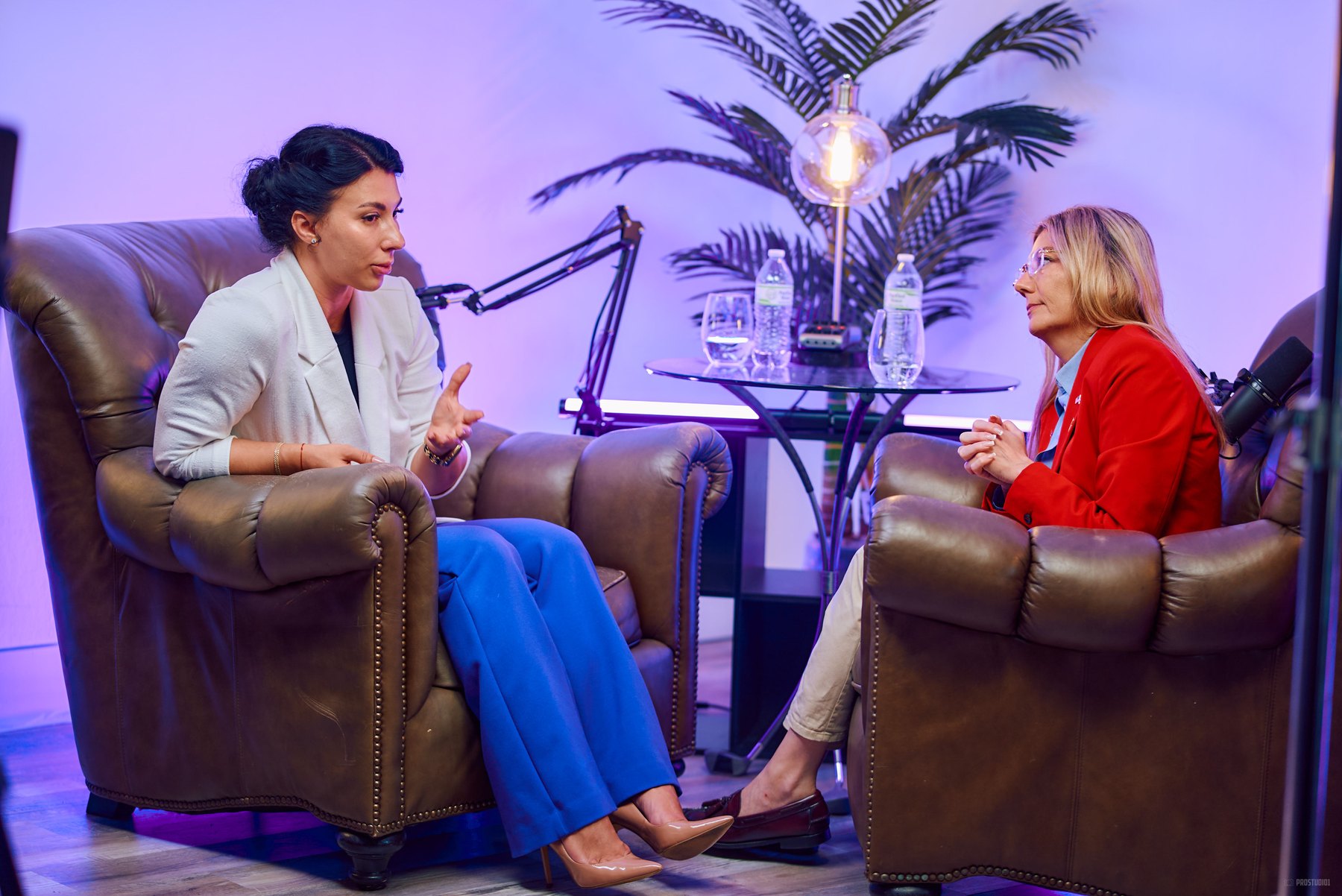
Valentina Mishina is an athlete, a coach and the holder of a green card for people with extraordinary ability. On the show I introduced her as the first woman to make the top six at the Olympia in the Women’s Physique division. Valya — the familiar form of Valentina — was born in 1992 and grew up in the Moscow region in a poor family with no father; today she lives and coaches in Miami.
I’d call this episode a conversation without “believing in yourself” and without rose-colored glasses. Valya says it plainly: she doesn’t believe in herself, she believes in the goal, and what drove her was anger, pain and the need to prove people wrong. She doesn’t recommend copying her path in full, but she thinks negative emotions shouldn’t be buried deep — they should be turned into work.
Below is her route, step by step: childhood, powerlifting, finding her division, the pro card, the Olympia and the price she paid for all of it. I give the numbers and judgments the way she gave them — that is, “according to her.” Drugs and her personal life come up here only in passing: those are her stories, and it’s better to hear them from her.

How Valentina Mishina got into sports: childhood, her mother and volleyball
Valya made her first “grown-up” decision in second grade 3:19. A volleyball coach invited the kids to join his team; the others wouldn’t decide without their parents, but she stepped forward — the youngest and the smallest in her class. At home, a reaction was waiting that she still remembers: her mother said sports were for idiots 4:11.
When a person can’t prove themselves in anything else, they go into sports.Watch this moment · 4:39
That, according to Valya, was how her mother put it. Valya says this was exactly what pushed her: the more they forbade it, the more she wanted to prove the opposite. She calls herself an “overachiever” who has run on anger her whole life 5:05.
That anger had roots. There was no father in the family, and her mother worked for two. Kids at school made fun of Valya: poor, with a low voice. They lived, as she recalls, on black bread and whatever the vegetable garden gave them. Volleyball practice was four times a week — “just insane” 10:07. Still, Valya holds nothing against her mother: she acted out of love, Valya says, and was simply figuring out how to survive and raise her daughter 7:02.
How Valentina Mishina got into bodybuilding: “Tarzan,” forums and powerlifting
In 2010 Valya happened to see the Russian all-male show “Tarzan” and was blown away not by the dancing but by the bodies 1:58. She had simply never seen physiques like that — not around her, not on TV. When she brought up bodybuilding, her mother said, “Have you lost your mind?” — and that, Valya says, worked like a red rag to a bull 7:17.
She knew nothing at all. She was studying economics, running, starving herself, cutting out carbs, reading Wikipedia and forums and not knowing what to believe. Then she got a job at a fitness club: giving gym orientations, cleaning the floor, commuting two hours each way. That’s where powerlifting champion Alexei Tumanov noticed her 15:58. He watched her, a total beginner, hoist a barbell onto her shoulders to squat and refuse to give up — and offered to train her. For free.
They started training, she believes, in 2012. In 2013, by her account, she won the Russian junior powerlifting championship, earned an official sports ranking and set a world record 17:51. That record later came in handy in her green card case. But Valya is honest: powerlifting was a base and a springboard for her, while bodybuilding was already living in her head — she just didn’t dare tell her coach.
Then she was transferred to another club, even farther from home, and there she caught the eye of Alexander, a product of Soviet bodybuilding 22:16. He suggested training by muscle group, and without telling her first coach she started going to the gym five days a week. By 2013, she says, she had left powerlifting. Her legs, built on conventional deadlifts, remained her biggest asset.
How Valentina Mishina found her division: Women’s Physique
In 2014 a female judge walked up to Valya at the gym: “You should compete” 25:31. Back then Valya didn’t understand how any of it worked. She was taken to the person who decides these things, to figure out her division. The verdict, as she retells it: not bikini, because there’s no waist; not bodyfitness, because of the huge legs and weak upper body; and the division for this hasn’t been invented yet 26:02.
She prepped anyway, and hard: chicken breast, 70 g of oatmeal and almost no other carbs. And suddenly, as she recalls, a couple of months before the show, a new division appeared in the rules that nobody really understood. On the show Valya calls it “physique.” Her build fit it perfectly: her legs were her biggest asset.
At registration it turned out Valya was the only one in the division; the others hadn’t dared. She walked out and, as she puts it, became the first on record. There was no satisfaction — because there was no competition either. Before that show she got very sick from dehydration, and, by her account, that experience is exactly why she takes a hard line against harsh diets and training to failure 35:06. That’s her story and her opinion, not advice.
How Valentina Mishina earned her pro card: Moscow, Russia and the Arnold in Barcelona
In 2015 Valya won an application contest: people sent in applications to prep for free with Lyosha, an endocrinologist, and there were, she says, about 300 of them 38:48. Lyosha taught her to count calories and follow a flexible diet: desserts allowed, a decent calorie intake, plenty of carbs, a cheat meal once a week. They “stopped torturing themselves,” she says, and her physique came in full 54:16.
Then she stepped onstage at a Moscow show in a whole different shape and took first place. That’s when she set her goal: the Olympia. She googled what “the highest” level was and decided she wouldn’t settle for anything less. At that point she had no visa of any kind — not even a Schengen one.
The Russian championship ended in fourth place. Judge Alexander Timoshenko, the only one of his colleagues who truly supported her, told her: “You need to go to the Arnold” 50:30. The top finishers weren’t going: Barcelona, a visa, travel, a hotel — too complicated and too expensive. By her account, the spot kept passing down the line, and with her fourth place Valya went. Her Schengen visa was approved.
In Barcelona she won her division and the overall title, beating a Brazilian athlete 55:23. And yet she looked in the mirror and saw a “skinny little thing.”
I never believe in myself, seriously. I believe in the goal, but I don’t believe in myself.Watch this moment · 55:51
The joy didn’t last. Two days after the win, Valya lost Lyosha. She tells the details herself; I won’t retell them here. Only one thing matters: everything she had been leaning on collapsed at once, and the decision whether to take her pro card had to be made right then 59:15. Almost everyone tried to talk her out of it; Timoshenko backed her. She took the card.
Valya calls her life a chain of events she can’t regret, and it’s here that she puts the main idea of the episode into words:
I move through anger and pain. Pain is my main engine.Watch this moment · 1:00:44
How Valentina Mishina qualified for the Olympia: points, eight shows and three hours of sleep
Valya’s American visa appeared “as if by magic”: a three-year tourist and business visa, obtained for a trip to Hawaii 1:08:29. She wasn’t thinking about the American stage then. In 2017 she stepped onto a pro stage in San Diego: she barely spoke English, and an acquaintance from social media helped her find her way around. Her first pro show, she says, ended with a top-five finish 1:06:06.
She couldn’t stop there. They decided to compete again, opened the calendar and picked the nearest show that was easy to fly to and inexpensive. It turned out to be Legacy, one of the biggest 1:14:54. Her division had 40 competitors. Valya was shaking and didn’t want to go out, but she did, made the first callout and, by her account, the top three in the finals. She was a couple of points short of the win: she was beaten by the very same Brazilian athlete Valya had defeated at the Arnold. But the points put her on the Olympia qualification list, even though she didn’t yet understand how it worked 1:19:13.
Then the “marathon” began. Valya was coaching seven days a week from morning till night, put together an online course, took on photo shoots and slept three to four hours a night 1:19:48. Over the season she competed in about eight shows. She never once took first — there were seconds and thirds. But, as she explains, top-three finishes earned points, and she rose to first place in the standings. The Olympia qualification was hers 1:20:13. She traveled alone and with almost no money: Nebraska, Louisiana and other states.
I didn’t know anything. I was going in blind, like a kitten, bumping my nose into everything.Watch this moment · 1:25:43
Valya finished thirteenth at her first Olympia. Making the top fifteen and earning your place, she stresses, is already an achievement. But for her it wasn’t enough.
I never had the ambition to win the Olympia, no. I wanted to get to the Olympia. My goal was the Olympia top six.Watch this moment · 1:27:49
Later she qualified directly, just as she had wanted, and won the Chicago Pro: she sobbed, unable to believe that a Russian girl had been given first place at an American show 1:29:11. After that, there was no goal left, and depression set in.
What price did the champion pay — and why did Valentina Mishina take a break?
Valya doesn’t sugarcoat anything. She keeps coming back to the idea that a big result comes at a price. She said the line below while talking about how she chose a mentor, but it fits her own career just as well.
Everything we do in this life has a price. If we have some success, there’s a price behind it.Watch this moment · 37:17
According to Valya, by the second year of her fitness journey 80% of the people who had started out with her had dropped away, and by the time she reached the pro stage, there was no one left beside her 1:26:30. She set her priorities and gave up a lot. In her personal life it cost her dearly, but I’m leaving out the details here.
Right now she isn’t competing. It’s a break, not a farewell to the stage, and this is how she explains it.
I needed this pause to understand who I am, where I am and how dependent I am on external factors.Watch this moment · 45:38
Her main conclusion: her self-worth used to rest on outside things — titles, achievements and the recognition of people she looked up to — and she had no inner foundation 42:09. She calls competing a kind of addiction where it’s hard to know when to stop. She wants to return to the stage only out of love for herself and for the sport, not out of a “self-destruction protocol” 1:24:29.
Valentina Mishina’s advice for anyone dreaming of the stage — and what life in Miami is like for her
Valya doesn’t like handing out instructions, and she warns you herself: don’t repeat her early experiments — they’re dangerous to your health 12:53. But you can still gather some advice from the episode.
Valya doesn’t paint Miami in glossy colors either 1:40:18. She needs the sun and the ocean: when things get really bad, she steps out onto the balcony, looks at the water for ten minutes and tells herself, “It’s okay, we’ll try again.” She values the freedom to look however she wants and not listen to the comments: in Moscow she grew tired of being judged. She names the downsides too: a one-bedroom one block back from the ocean costs $2,500 a month, good services like nails and skincare take a long time to find, and the food, in her opinion, is worse than in Europe. If easy money and low expenses are what matter to you, Miami, she says, isn’t for you.
The green card comes up only briefly in the episode: it was granted under the category for people with extraordinary ability, and her junior record, Valya says, helped her case. We didn’t go into the details of the process — for those, it’s best to talk to an immigration attorney.
What I’m taking away from this conversation
1. There’s no need to be ashamed of negative emotions. Valya talks about anger without any gloss, and that’s the most honest moment of the episode: the energy of anger can be turned into work. 2. A big goal is built from a series of steps, not from one lucky break. Moscow, the Russian championship, the Arnold, the pro card, eight shows for points: each one opened the door to the next. 3. Every result has a price, and it’s worth asking yourself ahead of time whether you’re willing to pay it. Valya says she gave the sport a great deal and that this resource doesn’t last forever. 4. Outside supports work only as long as they’re there. Coaches and authority figures helped her reach the Olympia, but she had no inner foundation, as she says herself. The pause is for finding it. 5. It’s worth being proud of yourself without waiting for the next title. Several times during the interview Valya said “I’m proud of myself,” and I wish she would say it more often.
The full episode with Valentina Mishina is in Russian, on my YouTube channel Without Borders. Everything here is her personal experience, not medical advice; for immigration questions, talk to an attorney.




 Kristina Samofal
 Photo & Video Production