


In shortLarisa Svechin, mayor of Sunny Isles Beach and a mother of four, came to the US from the Soviet Union in 1979. She says she won her election by 28 votes because she went to see the voters herself, people who felt nobody was listening to them. She talks about a dirty campaign, the search for land for a high school and the kind of police officers the city is looking for, and she advises women to start their path into politics with volunteering, punctuality and a mentor.
“Today we have a very special guest. To be honest, I’ve been waiting for this incredible woman with my heart in my throat” 1:20. August 2024, the Without Borders studio. Across from me sits Larisa Svechin, mayor of Sunny Isles Beach and a mother of four 1:37. I introduced her the way I saw her then: the first Russian-speaking woman mayor in the United States.
But her most honest admission wasn’t about elections or power. Her kids still tell her, “You’re always busy, you’re never here.” And every single evening she cooks them dinner 15:16. That’s where I want to start this story: not at City Hall, but in a kitchen where the kids are waiting for their mom. The episode is in Russian; on YouTube you can turn on auto-translated English subtitles.
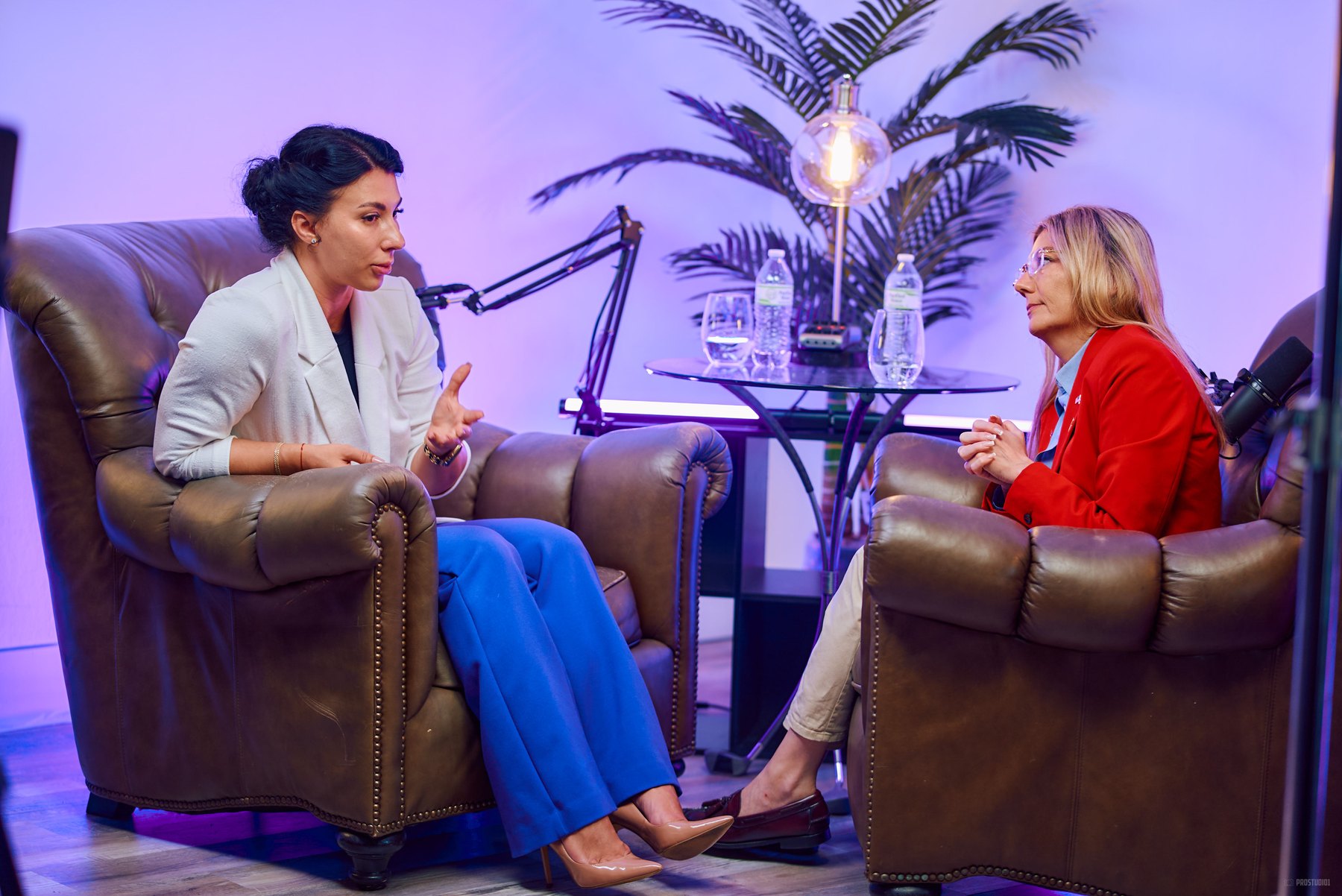 Shot at ProStudio1 studio
How did an immigrant girl from the Soviet Union become a mayor in the US?
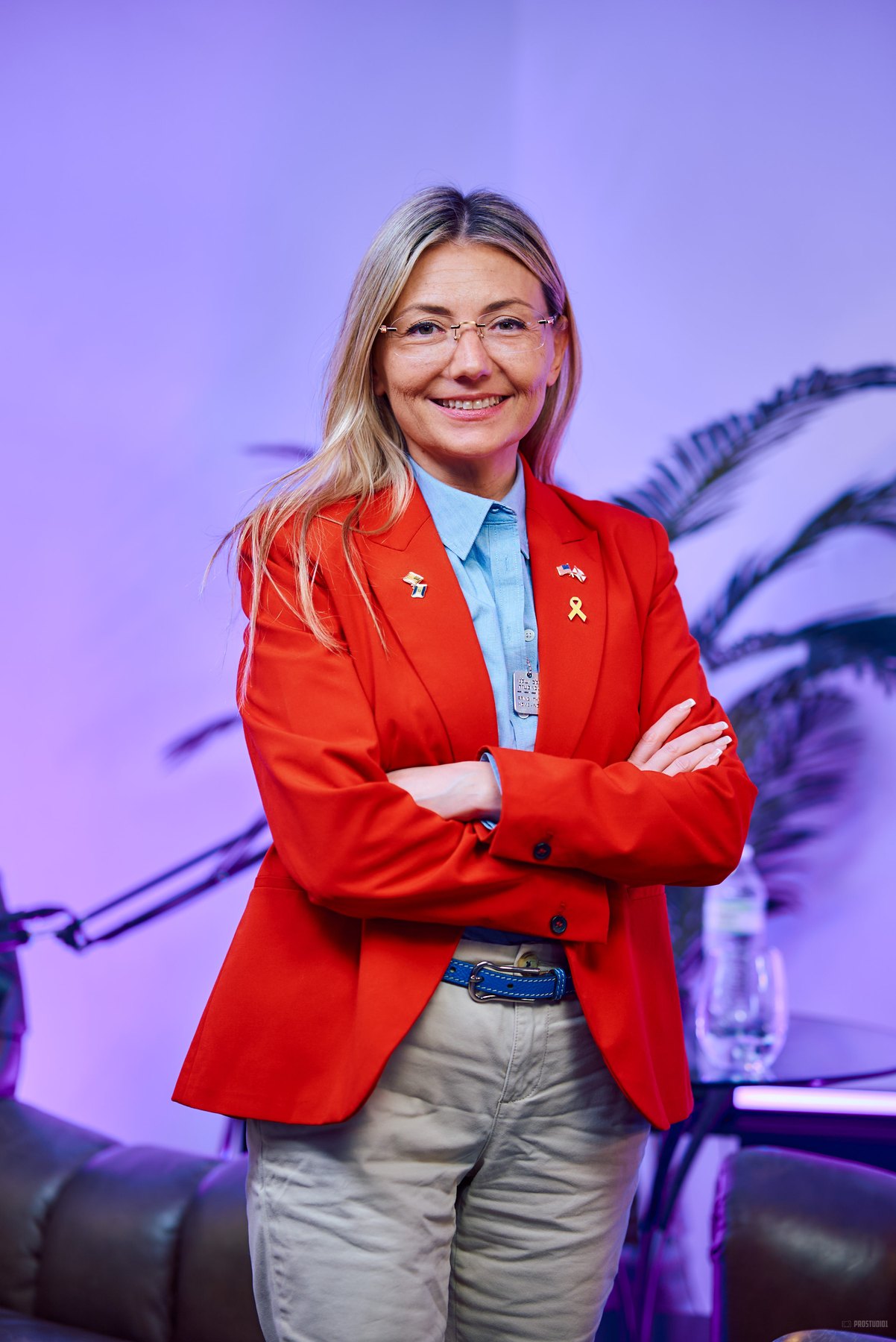 Shot at ProStudio1 studio
1979. A family with three daughters is leaving the Soviet Union for America: suitcases, one train after another, by way of Italy 9:46. They end up in Miami Beach. Back then, Larisa says, that’s where they “dumped” every immigrant nobody wanted: her family and people from Haiti 3:14. A little girl looks for just one friend to talk to, but there are almost no Russian speakers around. Her parents ask for one thing only: learn English as fast as you can.
She studied so hard that her parents worried she’d forget her Russian. She didn’t: after high school she spent every summer in Moscow. And she beat her fear of speaking a foreign language by taking risks all the time. One mistake she still remembers: she meant to say a man was slim and called him “bald” instead 39:43. Everyone burst out laughing 39:59, and that’s when she understood: if you want to get the words right, you can’t be afraid of getting them wrong.
Not long ago her mother asked her, “Which place do you consider your homeland?” 9:13 A very Russian question, Larisa laughs. She was born in Belarus but doesn’t speak Belarusian, and she remembers Russia more. And she grew up in America.
To me, America is my country. It’s my homeland.Watch this moment · 9:39
Then came Manhattan and an advertising agency, where she quickly rose to senior vice president. Back then, Larisa admits, what mattered most was earning more and more. Invitations to the Oscars and the Grammys, gifts: it’s easy to lose yourself in all that. Today, when someone tries to give her a gift as mayor, it means nothing to her: “I get joy from helping people” 10:48. She came back to Sunny Isles for her children. Leaving the Soviet Union, she had lost her grandmother, the one she used to pick berries and make jam with in the summer, and she wanted her own kids to know their grandparents and understand Russian. She knew in advance that the city would have more Russian speakers than Brooklyn 4:17.
I came to America myself on a green card for people with extraordinary ability. When Larisa talked about watching her parents and seeing how strong they had to be, I recognized every one of us in that.
Why are US elections so dirty?
Before she ever ran for mayor, when she first ran for the city commission 6:20, someone asked her what they might dig up on her. She said she didn’t even have a traffic ticket. That time nobody made anything up. This time, a story went around that “Putin gave her $500,000.” Larisa laughs: why so little? 6:38
She had been called names before. When she first came to America, she was called a “commie” and a “dirty Jew” 5:48. That, she says, doesn’t get to her. What struck her was something else: people tried to tie her to the “new Russian emigration,” as if people like that weren’t real Americans. One woman told her, “I didn’t even know you’d lived here so many years. I thought you’d just arrived.” The hardest part, Larisa says, wasn’t the attacks on her but the insults aimed at her children and at the friends who were helping her.
If I have the right to vote and the right to be mayor, that’s how this country is built.Watch this moment · 7:28
When I asked how she kept from losing herself under that kind of pressure, she said that, on the contrary, she found herself: you learn how much you can take, and if it’s truly yours, everything gets much easier from there.
When your time comes to help your city, your country, you have to seize that moment.Watch this moment · 7:42
How do you win an election by 28 votes?
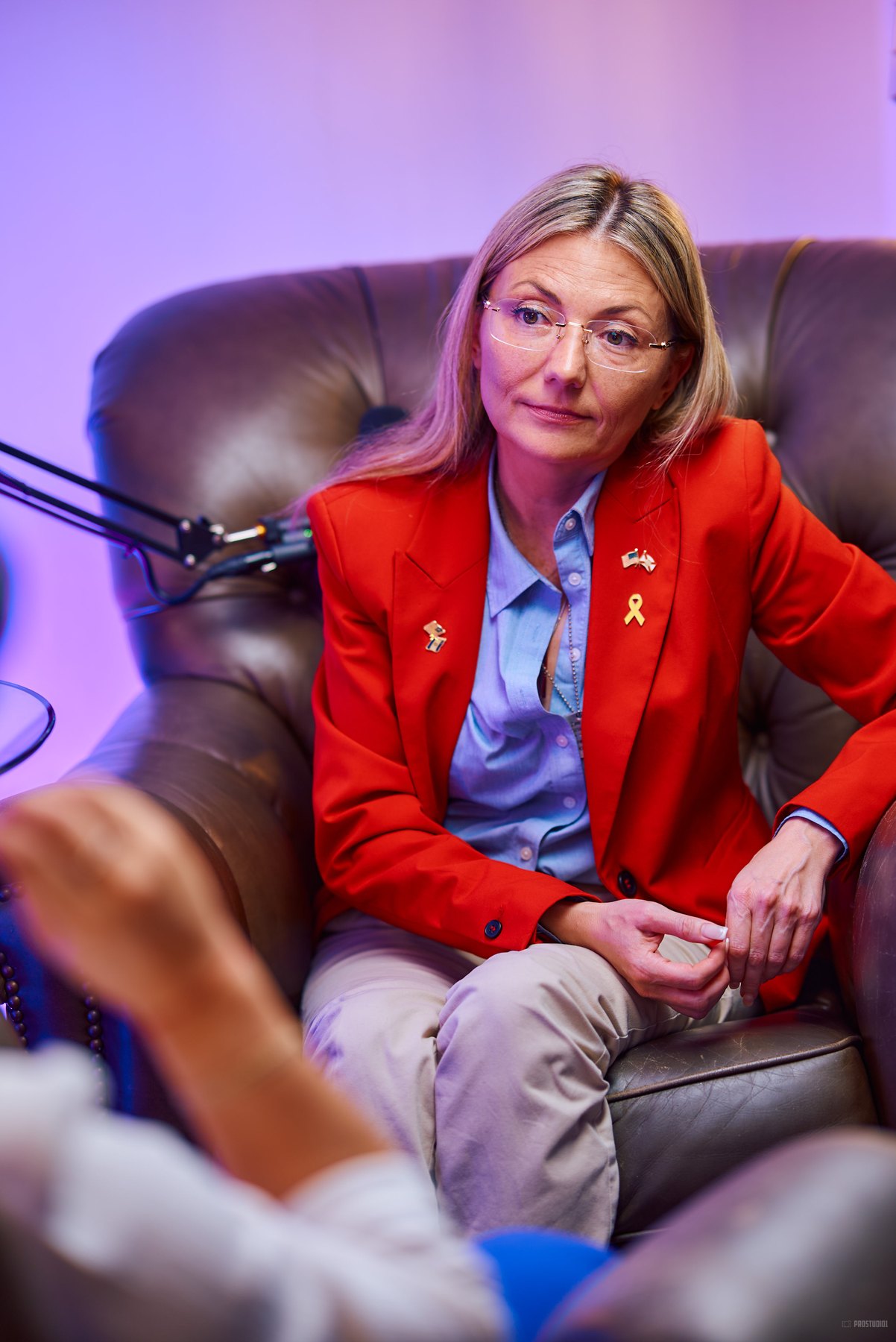 Shot at ProStudio1 studio
Before the election, Larisa went door to door herself. Not because a campaign manager told her to, but because, as she put it, every two or four years everyone talks about the same things, traffic and the like, and nobody actually asks.
I need to know what they want, not what I think they want.Watch this moment · 19:31
Many of the people she visited were elderly. Many said: what’s the point, nobody listens to me anyway. She found that both moving and frightening. People were so touched that a candidate took the time to sit down with them that they started calling their friends and neighbors on their own. She won the election by 28 votes 20:09.
For me, democracy is the most important thing. And if people don’t turn out, our country breaks down.Watch this moment · 20:35
I think this is exactly how you give people back their belief that their voice matters: not with a slogan, but with the time you spend at someone else’s kitchen table.
How is Sunny Isles changing, and where do you build a high school?
Twenty years ago, Larisa says, the city was mostly elderly. Now families are moving in, people live there year-round instead of a couple of months a season, and the restaurants are full. “I can say I helped with that: I have four kids,” she jokes 12:31. On 191st Street the city is planning a large multipurpose hall for sports, concerts and whatever the city will need over the next 10 to 30 years.
With the kids came the big question: schools. The city’s only school was originally built by older residents whose own children had long since grown up, and they worried there wouldn’t be enough students. Two years later it was clear there were plenty. Her own family, Larisa admits, wouldn’t have come back to Sunny Isles without that school.
Now the city needs a high school, and under Miami-Dade County rules that takes at least 10 acres 23:42. If, roughly speaking, 225 kids finish eighth grade, you need a building for about a thousand students, plus parking for high schoolers and teachers. So for the first time, the city has started buying land: it has already bought a two-story house behind the park across the street from the school and has its eye on the one next door.
What kind of police officers is Sunny Isles looking for?
The city deliberately hires calm people for its police force: many are older and already retired from departments in other cities, and in policing, Larisa points out, you can retire as young as 38 26:15. They need to be able to talk with residents, not shout or, God forbid, reach for a gun. Younger officers are hired too, but they go through a physical test and, most importantly, a psychological one 26:47.
And the city badly wants Russian-speaking officers. Most calls, the mayor told me, are domestic, and many come from Russian-speaking residents who don’t understand English well. When an officer and a resident can’t understand each other, things can go badly wrong. She says she keeps pushing Police Chief Eli Santiago to find officers like that 27:22. And she told him he can call her any time: “the shelf keeps calling me” 17:09.
How can a woman get into politics?
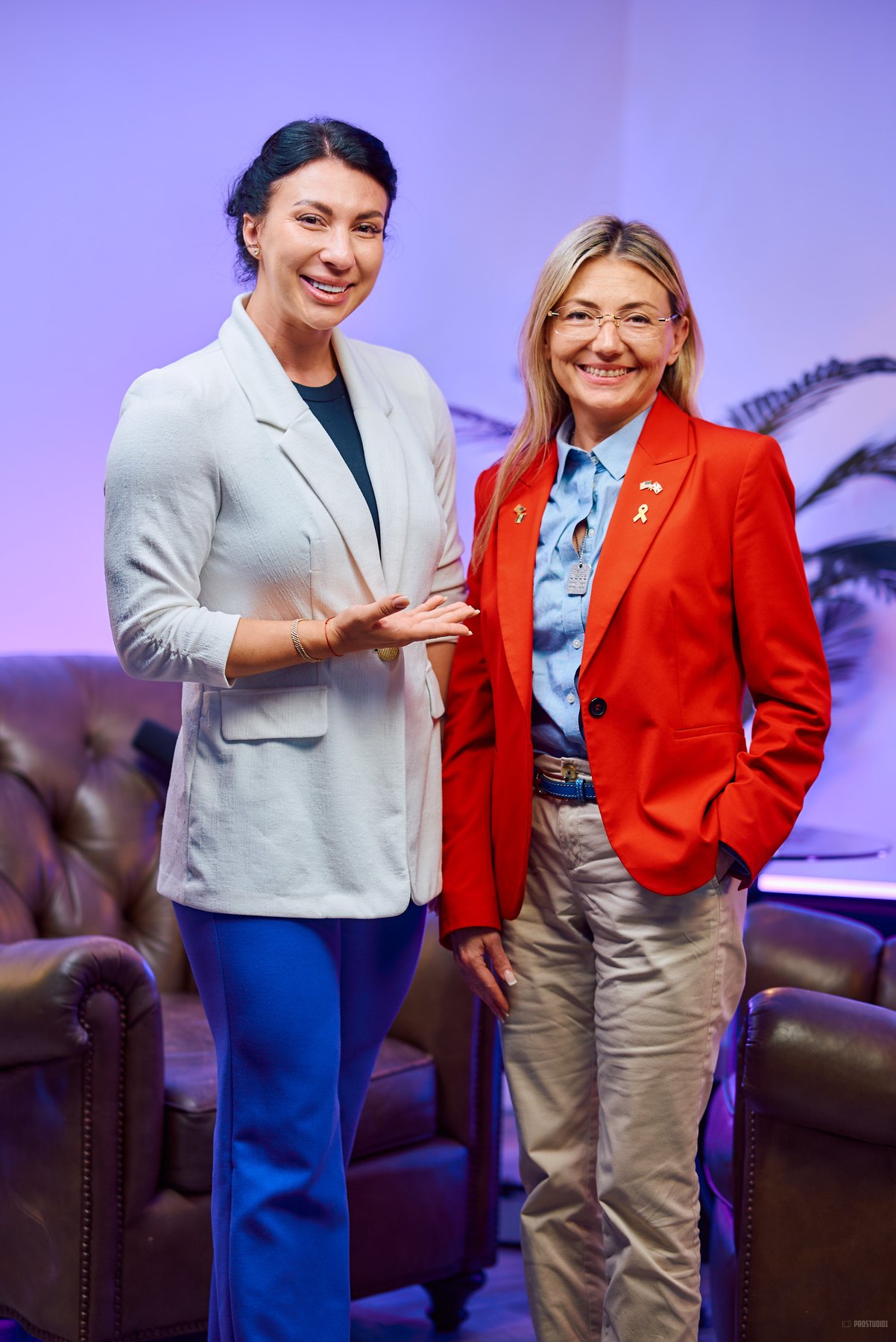 Shot at ProStudio1 studio
There aren’t many women mayors. Larisa was recently invited to Israel and turned out to be the only woman there. Politics involves a lot of aggression, she says, and it isn’t for everyone. But there’s an English saying she loves: if you want something done quickly and done right, ask a very busy woman.
For her, it’s also about setting an example for her kids: showing that a mom, and an immigrant at that, can hold an office like this. Her children are first-generation Americans, “and one of them could become president” 15:06.
Her advice is simple. Volunteer. Show up when you’re called, and show up on time. Learn to write well and read fast; a degree in political science isn’t required. And above all, find a mentor, someone you look at and think, I want to be like that. It can be a man, too. To anyone who wants to try, Larisa promised to help personally 29:54.
Find your place, where you get enormous joy, and keep going there, and help. For free, as a volunteer, because that’s how you understand whether this is for you at all.Watch this moment · 28:28
What does the mayor teach teenagers?
Larisa teaches business etiquette classes for teenage girls, and now she wants to open them to boys as well 31:33. Many of them, she laughs, don’t even know how to write a thank-you card 31:45. It all started with a girl she really likes, who asked her for a college recommendation letter and sent the request by text on a Sunday at seven in the evening 32:33. Larisa gives her phone number to everyone, but this time she thought: how shameless. Then, at a women’s luncheon for International Women’s Day, she heard the idea that grown women should pass on what they know to those who are younger.
Now she teaches simple things: how to write a letter, how to address an adult, “Miss” or “Mister,” not just by first name 33:38. She writes college recommendation letters for those who earn them and helps them look for scholarships and jobs. But when her own daughter wanted a job at Publix, she didn’t help, even though one phone call would have done it 36:42: let her go in every day and keep knocking on the door herself.
Fifty percent of success is just showing up. Many people don’t even show up.Watch this moment · 37:24
Are leaders born or made?
As a child, Larisa wanted to be a teacher. Why? “Because I wanted to be in charge. Everybody, line up!” 38:12 The same personality helped her rise quickly to senior vice president at the ad agency. But she’s sure there are quiet leaders too, introverts who stand in the back and have learned to lead. That’s not worse, just a different path.
What I’m taking away from this conversation
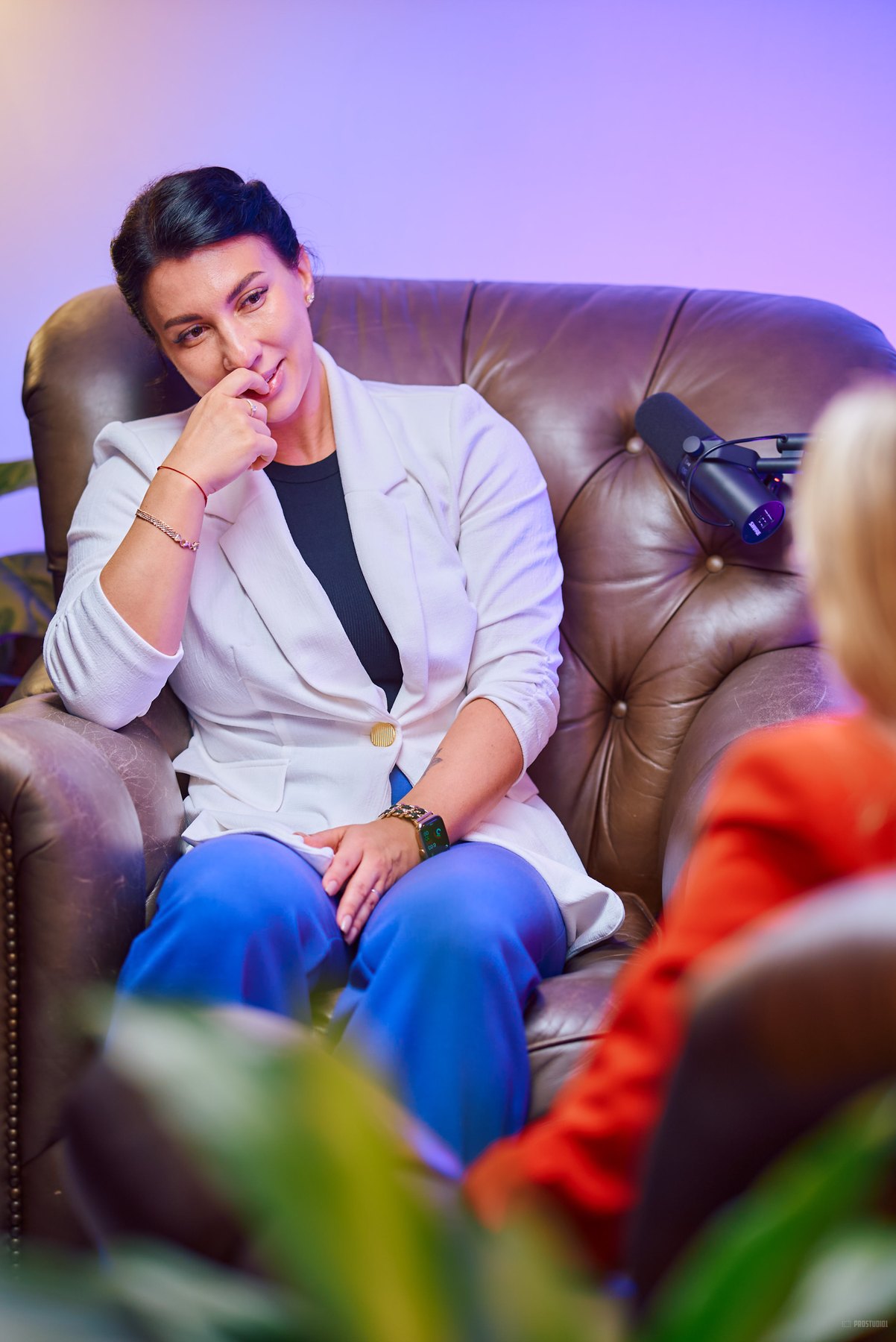 Shot at ProStudio1 studio
Back then, Larisa said that maybe as soon as next year she would go back to school, to become a lawyer, so she could help people where a mayor’s powers fall short 40:55. We both laughed that life without studying is boring. And at the very end she said something I remembered two years later, when we recorded our second episode.
In dark times there will be light, with God’s help and with your own strength.Watch this moment · 44:43
I expected a conversation about power, and instead I heard one about showing up: to voters, at their door; to your kids, for dinner; to your goal, on time. That, it seems, is her whole secret.
Two years later we recorded a second episode, and I asked Larisa the questions you had been sending me for weeks: about ICE, cameras, condos and the city manager’s exit. Read the sequel: “We Have to Help Everyone”.





 Kristina Samofal
 Photo & Video Production