


In shortAccording to Sunny Isles Beach Mayor Larisa Svechin, ICE checks in the city usually start with a car's license plate, not with people on the street, and the city police don't go looking for residents. The city can't step into disputes with a condo board, but for real fraud the police now have a dedicated detective for the first time. And the heart of City Hall's work, she says, is keeping your word to residents.
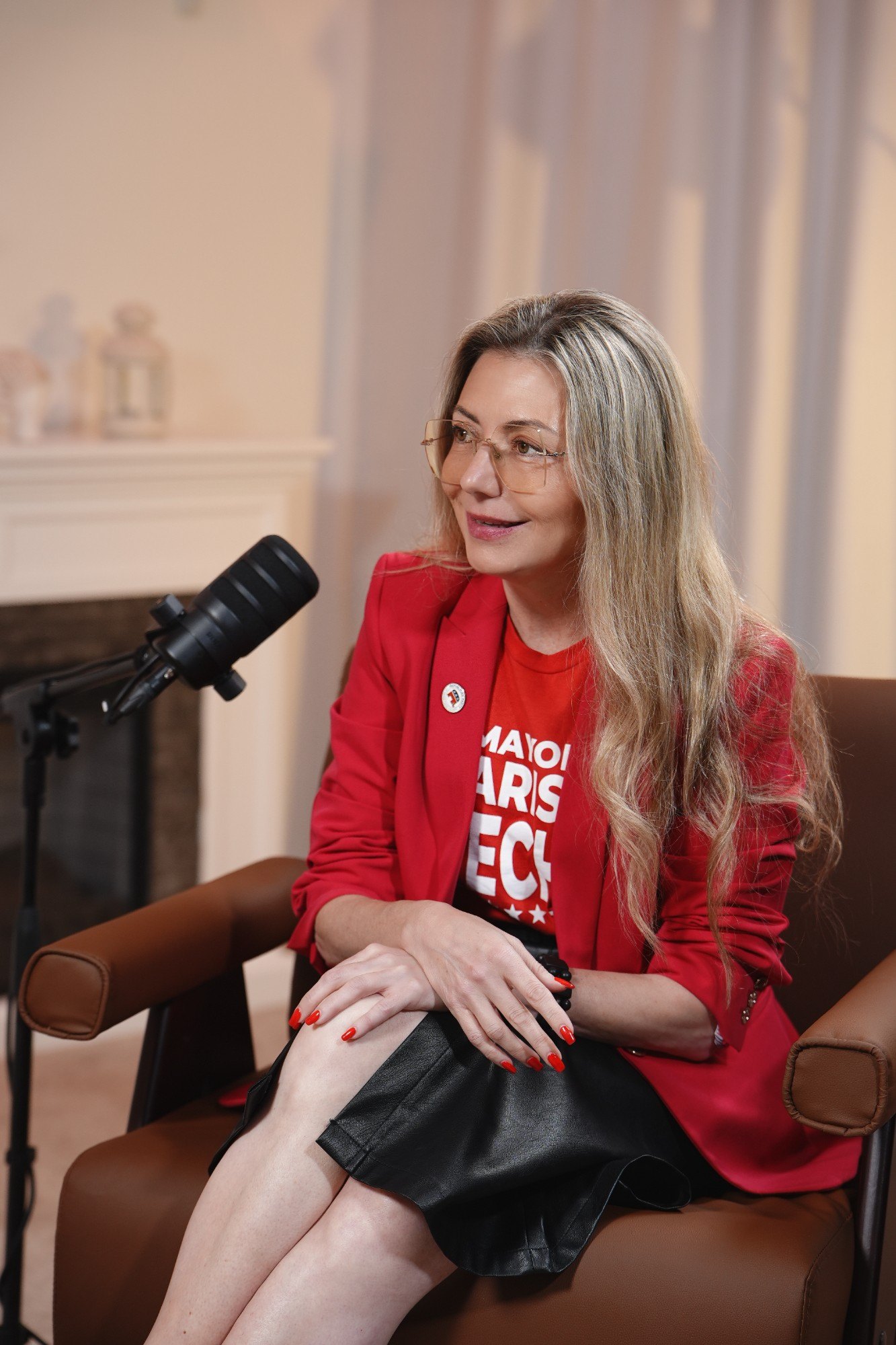
"Hi, everyone, this is BEZ GRANIC — Without Borders, and today my guest is the mayor of Sunny Isles, Larisa Svechin. Welcome!" "Thank you," Larisa smiles, and I lay out the pages with your questions in front of me. There are dozens of them: about ICE, about cameras on every corner, about condo boards, about the city manager's very public exit. Sharp, uncomfortable questions. I'll admit I'm more nervous than I was at our first meeting.
Many years ago, when the family had just immigrated to America, Larisa's father drove a taxi here. He spoke Yiddish, Spanish, German and English, and he would pick up people with suitcases, fresh off the plane from the former Soviet Union, and drive them to his own home. His teenage daughter got nervous: you don't even know them. He told her that we have to help everyone. Today that daughter is the mayor of Sunny Isles Beach, and she gives residents her personal phone number. I invited her back a second time because people ask a lot of questions about those in power, but rarely hear the answers firsthand.
Why is ICE detaining people in Sunny Isles, and should you be afraid?
 ProStudio1
This was the question you asked most, and Larisa started with a caveat: she isn't a lawyer and doesn't give legal advice. According to her, detentions are happening not only in Sunny Isles but also in Aventura and Hallandale Beach, where many people who came as refugees from Ukraine and Russia live, and many of them have an unclear status right now. In her observation, a check most often starts with the car: if the vehicle is registered to its owner, the plate shows that the owner's visa has expired.
The second scenario is when local police pull someone over for a violation, say a person on a scooter, and it turns out he has no driver's license because he can't get one. Then, the mayor explained, federal law requires calling Border Patrol, and from that point the city has no say. Her cautious advice for anyone who's worried: use Uber and don't give anyone a reason to stop you.
People shouldn't be afraid that someone is walking the streets and will come up and say, "You have an accent, I want to stop you." No. It's by the car.
Do the Sunny Isles police turn residents over to ICE?
The answer was short: no.
We don't have police like that, and we can't. We pay our officers, and they have plenty of work. It's not the federal government paying them to work with ICE.
Like other cities, Sunny Isles has a memorandum of understanding with the federal government: if the police know a person is in the country illegally, they're required to report it. But nobody, according to Larisa, goes out looking for people on purpose. I'm an immigrant myself, and I know how fear grows wherever information is missing. That's why it mattered to me that the mayor answered directly, without platitudes.
Cameras and drones over the beach: surveillance or protection?
When Larisa arrived at City Hall four years ago, she insisted that residents be told the truth, even when it's uncomfortable. Sunny Isles is "not Disneyland." On the day we recorded, license-plate-reading cameras helped find a car in which two children from Miami Gardens had been abducted. Soon, cameras with a live feed to the police will go up at bus stops too, since the buses are used mostly by seniors and children. The city does not use facial recognition, the mayor stressed; it watches only for residents' safety.
If you behave well, the right way, what difference does it make if someone sees you?
And at night, drones fly over the beach. If someone is drowning, she says, a drone can drop a flotation device right into the water within 90 seconds. Few people in the city know this, and I want everyone who lives by the ocean to know it.
Can the city step into a condo board's business?
 ProStudio1
Residents write that pools have been out of service for years while fees keep rising. Larisa drew a very clear line. If a new condo board promised to reopen the pool and didn't, that's a civil dispute, and the mayor can't intervene. Explaining the law and pointing people to the right place, yes; her own mother lives in one of these buildings.
But if they bought ten, paid for twenty and pocketed the difference, that's a crime. For cases like that, the Sunny Isles police now have a condo fraud detective, the first in the city's history. At first I wanted the city to simply come in and clean things up. Then I asked myself: do I want the government deciding how my building spends its money? Probably not. Residents elect the board themselves, and the best protection, it seems, isn't a social media post but a meeting and a vote.
I don't want the state to come into my home and say: you promised to do this, and if you didn't, we'll take it away.
Why did the city manager leave Sunny Isles City Hall?
 ProStudio1
People in town tell this story in different ways. Under the city charter, it's the mayor who nominates and dismisses the city manager, the person who runs the entire city. Larisa didn't assemble the team; she inherited it from the previous mayor, and after the election she deliberately made no sudden changes, so that people who had worked for the city for years wouldn't live in fear. A reason for dismissal, according to her, has to be serious and spelled out in the charter, not "I just don't like you." Everything was said at the last public commission meeting, and talking about it in public was personally unpleasant for her.
People said: what did we lose? Nothing. But I felt it deep inside. I said: we lost trust.
Her father left Larisa one rule: keep your word. I won't judge people I don't know. But that line stayed with me after the recording: money can be recovered, but trust takes far longer to win back.
Where should an immigrant start in a new city?
 ProStudio1
Asked what matters most at the start, money, education or the ability to adapt, Larisa answered right away: the third. Anyone willing to work hard will earn money, and you can study later; she herself earned her master's degree a couple of years ago. Her practical advice: ask City Hall for the new-resident packet, make your driver's license appointment right in the city, learn English until you're fluent, talk with Americans and not only with your own community, know your rights, and vote.
Our project is called Without Borders, and the hardest borders in America, I think, aren't on the map but inside us: the language, the fear of asking, the habit of waiting for someone to hand you something.
America gives what many countries don't. It's hope. Here you can do anything if you have the desire.
What I'm taking away from this conversation
Honestly, I didn't expect anything in particular, except maybe some dodging on the sharpest questions. But Larisa always answers as it is, and I went in for a straight conversation and straight answers. That's exactly what I got. Larisa laughs that people often call her Sveta, and she goes along with it: let it come from svet, the Russian word for "light." The main thing she teaches her children is how to apologize properly. And after the recording, I keep thinking about those people with suitcases her father drove home. It seems she's still doing the same thing, only now she has a whole city.
The full episode will be released in Russian on the BEZ GRANIC YouTube channel soon. Subscribe so you don't miss it. Rules and procedures change: for questions about your status, talk to an immigration attorney.





 Kristina Samofal
 Photo & Video Production