

In shortNatalia Bystrova has been competing in bodybuilding for 40 years: she first stepped on stage at 19, and her 40th anniversary in the sport falls in August 2026. Her main advice on longevity: plan your year so that recovery is built in after every competition, and trust the coach who is responsible for your prep. She explains how she chooses a coach, why she now does without grueling cardio, and why posing should be practiced from day one.
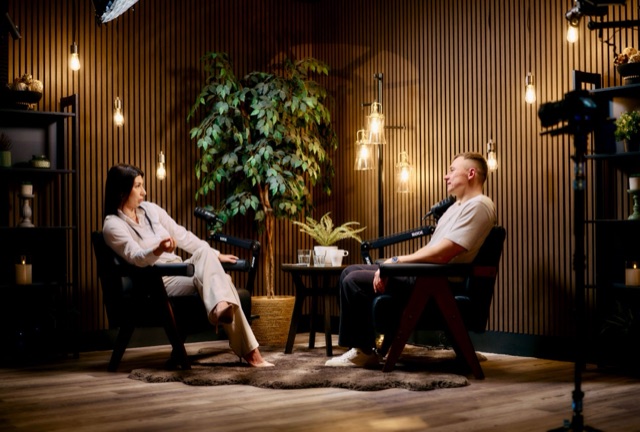
Natalia Bystrova has been competing in bodybuilding for 40 years: she first stepped on stage at 19, and her 40th anniversary in the sport falls in August 2026. She competes in Women’s Physique and works as a coach. We recorded our conversation in Miami, right before a show where, for the first time in her life, she was planning to compete in five divisions at once.
The main idea of the episode: longevity in sport doesn’t rest on a secret, it rests on a plan. First prep, then mandatory recovery, and between the two, a coach you trust so completely that he can do the thinking for you. Natalia learned this firsthand, including from a bad experience with a different coach.

How do you stay in the sport for 40 years?
Natalia was asked point-blank whether there’s a secret to longevity in sport. There are no secrets, she answers, it’s simple: you have to plan your year so that recovery is always built in after competitions. In her experience, athletes who compete nonstop often disappear: it becomes too hard for them, both physically and mentally. And the mental break from competing, she says, matters even more than the physical one.
There really are no secrets. It’s all simple. You need to plan your year so that a recovery process is always built in after competitions.Watch this moment · 03:38
Her personal rule is the plan, and, as the grim old Russian saying goes, one step to the left or right and you’re shot. Prep first, then recovery. Natalia also told me she doesn’t like celebrating her birthday, but she remembers turning 55: that day she woke up feeling that a new horizon was opening up. When I pointed out that many people believe it’s all over after 50, she answered that they’re wrong.
Why Women’s Physique — and what does genetics have to do with it?
Natalia chose this division for two reasons. She loves to train heavy, and heavy training leads to a different kind of muscle development. And she was born with proportions that differ from what other divisions require, so she picks her division accordingly. As for women’s bodybuilding, she says she “hasn’t grown into it” yet.
Genetics, according to her, matters a great deal, but genetics doesn’t develop without hard work. From the very start, she tells her athletes honestly what their genetics will allow them to achieve. People often think they’ll go to a good, decorated coach who will do everything for them, and they’ll come out on top. Natalia explains: genetics first, everything else is work, and sometimes you have to wait your turn to reach the podium.
How do you prepare your posing and your free-posing routine?
For Natalia, the free posing routine is a creative process. She chooses music to match her mood, and she works in poses and elements — sometimes from acrobatic gymnastics — when the rules allow it. Many athletes, she says, ignore this part and go on stage hitting poses “by the count: one, two, three.”
Any fool can build muscle, but not everyone manages to show off their development on stage.Watch this moment · 12:09
You have to work on posing from the very start of prep, she believes. Otherwise you’ll be stumbling into every corner of the stage “like a blind kitten.” You even have to account for the floor surface, so your foot doesn’t catch when you turn.
You need to do everything from the very beginning. It’s a workout just like everything else.Watch this moment · 1:00:27
She worked on her posing with an American coach, and that first session, she says, shattered her stereotypes. But she didn’t like the angle he chose, and today on stage she sets her poses the way they look most striking on her. One of his recommendations did help: in the back double biceps, the gap between your feet should be no more than 35 centimeters. Yet she immediately recalls a woman who beat her with exactly that pose — by standing with her feet wide. The correct pose and the winning pose, Natalia says, are not always the same thing.
How do you choose a coach — and what if your prep isn’t working?
To women getting ready to step on stage, Natalia’s first advice is to be very smart about choosing a coach. She herself picks a coach by the results of his athletes.
She told her own story candidly. For her first Olympia in Las Vegas, she prepared with a coach she calls a supercoach and values highly. But the workload was such that she decided she couldn’t survive another prep like it. According to her, that meant two-hour weight sessions, plus an hour of cardio in the morning and another hour in the evening. “It was like I wasn’t living,” she says. Her next experience, with a different coach, didn’t go so well: they never found common ground. So she went back to Denis Kapustin, a coach from Russia she has worked with for many years. He guided both her competition prep and her supplements. Her physique, she says, improved phenomenally — even Denis didn’t expect it was possible.
The athlete’s job is to execute; the coach’s job is to think.Watch this moment · 48:01
She also explains why you shouldn’t trust the mirror before a show: if you look at yourself and think you look “kind of fat” or “like a twig,” that, according to her, is normal for an athlete — you always want to be better than your reflection. That’s exactly why you need a coach you trust completely.
Why do athletes need supplements, and when does cardio do harm?
Natalia is against exhausting cardio. Denis Kapustin, she says, is firmly against it: cortisol is already high, and if cardio wears you down on top of that, nothing good will come of it. She distinguishes between cardio that trains the heart and cardio that “kills” you: afterward you don’t want to work, eat or sleep. That, in her view, is a sign your cortisol is through the roof.
As for supplements, she says that in her experience they work. Denis plans them not only for prep but for recovery as well. Because of that, after a long, strict diet her digestion goes right back to normal, and she doesn’t have to drop out of her routine the following season.
How does a coach work with athletes?
Natalia takes an individual approach with each athlete, but she describes herself as a no-nonsense coach who gives instructions and expects them to be followed exactly. She stresses that a coach and a babysitter are two different things.
I’m a coach, but I’m not a babysitter.Watch this moment · 24:25
Men are easier for her: whatever she says, they do. With women there can be setbacks because of things at home or PMS. She also told the story of two athletes she was preparing for the Russian national championship: one followed everything to the letter and took first place. The other, right before going on stage, asked whether she would still be able to have children after a prep like this, and Natalia refused to take her through the water cut: she won’t take responsibility for someone who isn’t ready in advance. The second athlete placed eleventh.
What I’m taking away from this conversation
In parting, Natalia said she still has plenty ahead of her: America has many divisions, including 60+. Someday, she says, she’ll have to leave competitive sport, but she isn’t going anywhere from bodybuilding: she’ll stay on as a coach.
The full conversation is in Russian on the Without Borders YouTube channel.





 Kristina Samofal
 Photo & Video Production