

In shortBBC journalist Yuri Goligorsky shares his secrets of effective communication: hold the pause before you answer, lower your voice instead of raising it, say it shorter, study the person you’re talking to, find one face in the audience — and don’t take yourself too seriously.
The first time I interviewed Yuri Samuilovich Goligorsky, my leg was shaking. Honestly. I had memorized his biography inside out: more than thirty years at the BBC, conversations with world leaders, the story with Margaret Thatcher. I wanted to play my trump cards right away. He sat down across from me, said hello, and inside I felt like I was about to jump out of a plane.
Of course he noticed. And instead of answering my first question, he told me a joke. Ronald Reagan wakes up in a cold sweat: “I’ve been invited to speak at the Soviet Communist Party congress, and I’m not ready.” The shaking vanished on the spot. That was the first time I saw what we would later spend a whole hour talking about: a good conversation partner doesn’t pressure you, he helps you open up.
The second time, Yuri came to my studio with a specific topic: the secrets of effective communication. How to talk to your boss, a government official, an employer, a room of five hundred people — and actually be heard. Below is the most useful material from that conversation. In plain words, the way he likes it.

Why a pause is stronger than any argument
Yuri named his first secret right away, without any preparation: the pause. We all rush to respond. The other person hasn’t finished speaking, and our answer is already loaded. And often we simply haven’t heard what that person really wants.
The pause is insanely important in any system of communication.
Then came the stories that alone are worth watching the whole episode for. Anwar Sadat, in an interview with Barbara Walters, hears the question, slowly packs his pipe with tobacco, lights it — and only then answers. According to Kissinger’s memoirs, Andrei Gromyko, the Soviet foreign minister, spoke brilliant English over dinner in the evening and told jokes. Then the next morning, at the official talks, he suddenly “didn’t understand a word” and waited for the interpreter. That was how he bought himself time to think.
What does that give you in everyday life? If the person in front of you is a friend, they’ll smile during your pause. If it’s an opponent, they’ll start to get nervous: “What is she up to?” Yuri’s advice is simple: don’t rush to answer. Figure out what you want and what the other person is after. Somewhere in the middle you’ll find a solution that works for both of you.
from 5:57How to speak so people listen: quieter, not louder
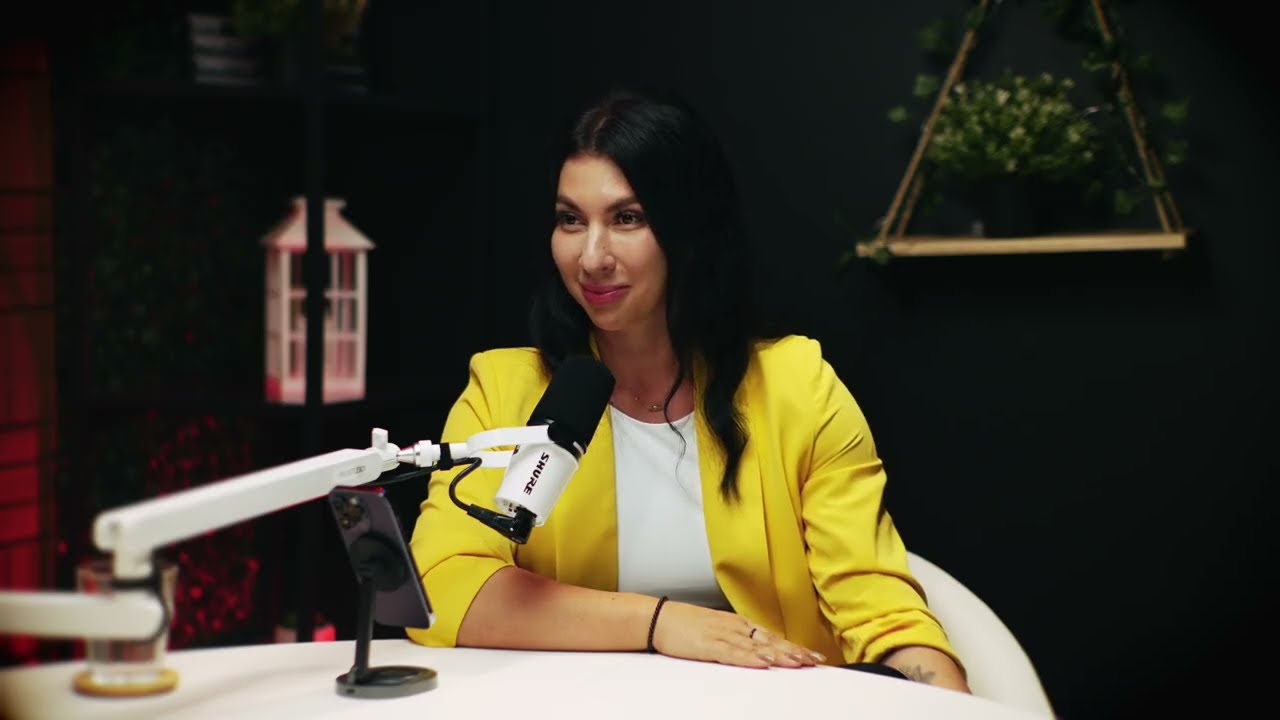
When you raise your voice, you give away that you’re nervous. Yuri explained it with the example of his favorite, Margaret Thatcher. Before she became prime minister, she had a high, squeaky voice. She was advised to lower it by at least half an octave and to speak quietly.
The moment you speak quietly, you make people lean in to listen to you.
Picture a negotiation. If Thatcher raises her voice, everyone leans back in their chairs: “Go on, let’s hear what nonsense you’ve got.” But when she speaks almost in a whisper, people can’t help tensing up and catching every word. Politicians have been using this trick for a long time.
 from 11:14
The same goes for gestures. One gesture at the end of a sentence — a raised finger, “period, I’ve said it” — works. Waving your arms nonstop doesn’t. Common sense applies to everything.
And now the good news. I asked whether this can be learned or whether it’s a gift. Yuri answered: “It’s impossible to teach, and it’s fairly easy to learn.” Pick up your phone, film yourself and watch it from the outside. You’ll see for yourself what you want to fix, cut or strengthen. “It’s not a gift from God. It’s a craft.”
Say it shorter: the golden rule of radio
Radio has a law, and Yuri shared it with us: no complex sentences. Fewer commas, more periods. One sentence, one thought. The best sentence of all is a single word, like the Russian “Vechereet” — “Evening is falling.”
On paper you can wind a thought through three subordinate clauses. Out loud — on screen, on stage, at a job interview — it doesn’t work. The shorter, the clearer. I caught myself writing even my Instagram stories differently after this conversation.
How to get a busy person to open up
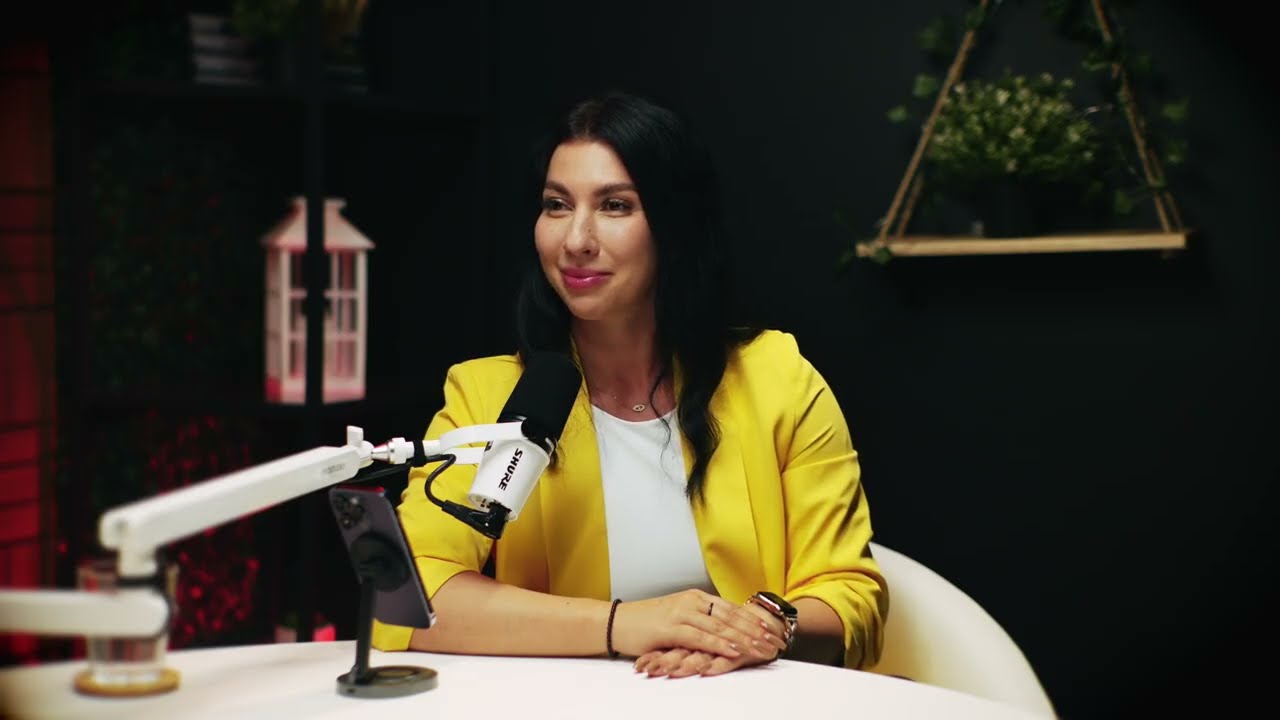
This is my favorite story from the episode. Yuri went to interview the president of Abkhazia, Vladislav Ardzinba. He was told, “Twenty minutes will be enough.” Twenty minutes with a president is clearly not much. So Yuri started studying not politics, but his subject’s hobbies. It turned out the president had one burning passion: he grew roses. He had also spent his whole life studying Sumerian manuscripts.
The camera came on, and Yuri’s first question was: “Mr. President, I didn’t come here so much to discuss politics. Let’s talk about roses.” The tapes in the cameras were swapped out one after another. They talked for three or four hours, went out together to look at the roses — and, of course, eventually got around to politics.
 from 16:43
Find the string you can pluck, and it will make the other person stop in their tracks.
The takeaway for each of us: you can’t walk in off the street and shove a microphone in someone’s face. Find out what makes that person tick. It’s in their biographies, their interviews, their social media. And you’ll find a way to reach anyone.
On first impressions, Yuri kept it short: be a notch above average. People do judge by appearances. Get yourself put together — it’s a sign of respect for the person you came to see.
Logic or emotion: what actually persuades?
I asked which is stronger in a conversation, logic or emotion. His answer: emotion without logic will never help. But emotion can reinforce a logical argument. And you can’t just read your questions dryly off a sheet either — “you can’t be a grump.”
Yuri also explained why a journalist doesn’t have a point of view of their own. “I’m not paid to state my position. I’m paid because I can come to you, find out your point of view and pass it on to the audience.”
Here I couldn’t resist telling my own story. At university, a philosophy professor said to me: “You can’t stand on your point of view. Where is it?” I took a piece of chalk, drew a point on the floor, stood on it and said: “Here it is, and I’m standing on it.” Yuri answered with one word: “Bravo.”
Then he told me how his daughter was taught to debate at a British school. The class was split in half: one side for corporal punishment of children, the other against. His daughter got the position that neither she nor her dad believed in. They prepared together and won. Today she is a prominent lawyer in Great Britain.
How to overcome the fear of public speaking
I asked this one for everyone who has ever stood in the wings with a dry throat. Yuri’s advice: find one face in the audience and talk to it. Only to that face. The others won’t be offended — they’ll feel that you’re speaking to a living person. If there are teleprompters on both sides, find two faces.
Before going on air, he drinks almost-boiling water with honey and lemon, does a lip-trill warm-up — and steps up to the microphone. He also passed along a life hack from British prime minister David Cameron: don’t go to the bathroom before a long speech, and you’ll speak at the right pace. Yuri himself, he says, doesn’t follow that advice.
If there’s no nervousness, don’t step into that abyss. The moment you lose the ability to be nervous, leave the business.
That really struck a chord with me. Nerves aren’t the enemy. They show the other person that the meeting matters to you. Yuri compared it to a young man in love waiting for his first date.
from 29:10If you lose your place on stage, tell the truth
What do you do if you lose your train of thought in the middle of a speech, or a page falls on the floor? Be honest. Say: “Forgive me, I’m nervous — you matter a lot to me. Let me pick up where I lost my place.” Don’t blame the secretary who “mixed up the pages.” The audience will understand, laugh and applaud.
Here Yuri told a story he heard from Inna Churikova, the celebrated Russian actress. She was in a play with the great Tatiana Peltzer. Peltzer walked downstage to begin a monologue, stopped, said “Forgot” — and added an unprintable word. Then she turned around and walked off. The audience wept with delight. And Churikova, to keep from laughing, chopped up a whole mountain of carrots on stage. Only the greats can get away with that. But honesty works for everyone.
Then Yuri handed my own story back to me. I told him how at school I went up to recite Pushkin’s “The Bronze Horseman,” froze and stood silent on stage for a full minute. He said: “That’s called a Kachalov pause,” after the legendary Russian actor Vasily Kachalov. “You made the audience wait and tuned them in to Pushkin. I’m sure you brought the house down.” And that’s exactly what happened.
Charisma and improvisation: can you learn them?
When I asked about charisma, Yuri first pretended he didn’t know what I was talking about. Then he said: charisma is goodwill, a desire to understand a person, to reach an agreement, to make them laugh. And above all, not taking yourself too seriously. “Be simple, and people will be drawn to you.”
About speakers on big stages, he put it this way: keep a clear thread of your talk in your head, but don’t cling to the page. You can depart from the script — that’s called an ad-lib, improvisation. Just remember that the best improvisation is well rehearsed. You can almost always guess in advance where you’ll be interrupted and prepare an answer.
How to make an impression at a job interview
This matters especially for anyone looking for work in the US. Yuri advises showing up knowing a couple of key numbers about the company: last year’s profit, what it does, where it exports. Even a summary of the annual report is enough. If it’s a creative company, know which films or shows it has produced and who made them. The manager sees right away: you prepared, you’re genuinely interested.
And what about shouting about your successes, the way Donald Trump advises? Yuri has lived almost his whole life in Great Britain and says it simply isn’t done there. If your success is real, your work will do the shouting for you.
How to handle criticism and hate
At first it was hard for him too: “But I was trying to do the right thing.” Then he realized something simple. Say “Good morning” on air, and a wave of criticism will come down on you: why that hairstyle, why didn’t you say anything else, why did it air in the evening.
There are people who are offended by the very fact that you exist. You just have to brush them off. But constructive criticism is worth listening to: not everyone who criticizes you wishes you harm.
With social media, Yuri advises being your own editor. Cut out unreliable sources. Don’t trust the phrase “a very reliable source, but I can’t name it” — strike it immediately. He likes people who have doubts: the ones who write, “I heard this, but I have my doubts, and here’s why.”
And how do you say “no” without offending anyone or betraying yourself? Very quietly and very firmly. “No.” That’s it.
from 53:27What question should you open a conversation with?
Finally, I asked what question you should “burst into” a conversation with. The answer: something unexpected and funny. The first question opens the door. Study the person’s hobbies — like with the roses. Or latch on to a detail: “You drive a Toyota too? I’m worried about my suspension — has yours ever let you down?” or “What a jacket — that color is in fashion right now, my wife told me.”
Every time I see Yuri Samuilovich, I’m in awe. At his age he records one show after another, jokes, argues and teaches. We will definitely meet again more than once — I promised him that at the end of the episode.
Which of Yuri’s tips will you try first? Write in the comments under the video on YouTube — I read every one. The full episode is in Russian on the Without Borders YouTube channel.







 Kristina Samofal
 Photo & Video Production