

In shortCoach Danil Arsenyev believes genetics plays the leading role in women’s bodybuilding; that’s his opinion, not medical advice. He advises competing while you’re in shape, but keeping it to two to four shows a season, and before blaming judging “politics,” taking an honest look at the athletes who placed higher. He also talks about how life circumstances and relationships affect prep.
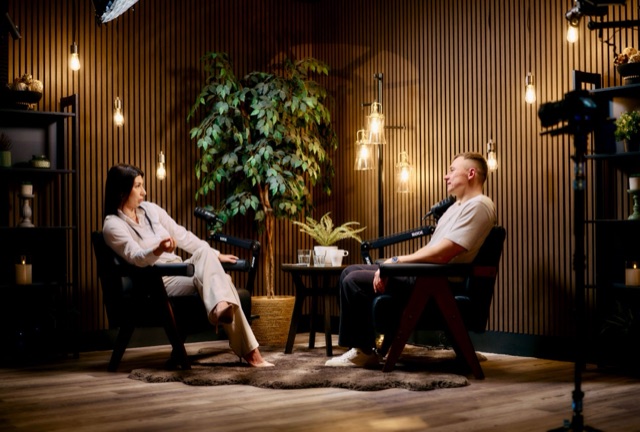
Danil Arsenyev is a coach who used to compete himself and today prepares female athletes for bodybuilding shows. We recorded a candid conversation about what really stands behind a champion’s physique.
The main idea of the episode, in Danil’s words: in bodybuilding, women’s bodybuilding included, genetics always plays the leading role. Everything I pass on below is a coach’s opinion drawn from his own practice, not medical advice.

What decides women’s bodybuilding: genetics or “just add a little more”?
Danil explains with an example. A group of teenagers the same age walks into a gym; they eat roughly the same and train with the same coach. Several of them bench, say, 30 kilos, and one benches 50. Even if they’re all training natural, he says, one of them is clearly going to dominate.
In bodybuilding, women’s bodybuilding included, genetics is still always going to play the leading role.Watch this moment · 0:30
According to him, the same holds true for the women’s divisions, from Bikini and Wellness to all the rest. If women look at the hard, extreme physiques at the Olympia and think, “let’s pile on a little more,” that, in Danil’s view, is a benchmark that leads them astray. When someone new breaks through at the top level, he says, it is always a genetically gifted athlete. I’ll say it again: this is a coach’s opinion, not medical advice.
How many shows a year should an athlete do?
Danil points out that the US simply has far more shows: in Florida alone, according to him, you can travel and compete all year long, while back in Russia’s Ryazan or Voronezh regions there might be one show a year.
Asked whether to compete as often as possible or to prepare for a couple of shows, he answers practically. A lot depends on the athlete’s finances. If you’re already in shape and the next show is a week or two away, you should compete. He remembers women who took second place, got upset and wanted to go straight into the off-season — even though the winner who beat them had already earned her pro card in the overall and wasn’t going to the next show.
If you’ve prepared, go compete.Watch this moment · 8:22
But if the judges have said outright that you lack muscle mass and your conditioning is already there, then, according to him, it makes sense to go into a building phase.
He doesn’t recommend stretching a season over a whole year: it’s hard, because competition mode is a kind of focus in which you’re constantly giving something up — holidays, time with family and the people close to you.
Within a season, two, three, four shows at most, however many it can be — close out the season and rest.Watch this moment · 10:19
How does Danil approach nutrition and prep?
All of his athletes follow a flexible diet: not a single food is off-limits. The key is to hit your protein, fat and carbs, with roughly 80% coming from healthy food, while the other 20% can include a piece of candy, a cookie, ice cream or a pastry — and according to him, this works even for professional athletes.
He then walks through the example of a woman who said she didn’t track her diet and estimated it at 2,300–2,500 calories. For three days she weighed and logged everything she ate: it came to 2,300–2,400.
When the physique isn’t coming along, though, the reason, in Danil’s experience, isn’t necessarily in the numbers. He remembers an athlete for whom nothing was working, until it came out that she’d had a falling-out with her partner, and on top of that came flights and moves, sleepless nights, shouting and fights. Sometimes it’s just fatigue: everything looks fine on paper, but the person is struggling. You have to pay attention to circumstances like these, he says.
Why do some athletes make it to the stage while others quit halfway?
Danil says there are many factors, and he starts with psychology. Sometimes, a couple of weeks before a show, an athlete says she won’t step on stage. He has had few cases like that — usually everyone made it — and when someone didn’t, the main reason was relationships.
Some husbands and boyfriends, he says, don’t understand the glass meal-prep containers, the obsession and the lack of time, even though for an athlete these are simply tools for getting results. His advice: once you start prep, talk through with your partner, as fully as you can and ahead of time, what they may run into — because at the end, when you’re hungry and depleted, you may genuinely have no focus left for them.
About his own experience he’s honest: about a month before a show he had no desire for anything at all, and he can’t speak for others.
So: understand, forgive and accept.Watch this moment · 25:26
Is there politics in competition judging?
Danil disagrees with the line “they didn’t place me because the judges know the girls from the Olympia.” If an athlete has been in the Olympia top 10, he says, she gets placed higher because she’s strong, not because she’s known. An athlete’s condition may vary from show to show, according to him, but on the overall criteria and proportions, that athlete can still be better than you.
He compares it with the men: when Samson Dauda shows up at a European pro show, the other heavyweights don’t shout about politics.
He won’t be placed first in Prague because he was there; he’ll be placed first because he is objectively better than you.Watch this moment · 33:43
He also explains how the scores add up: from the judges’ placings, the highest and the lowest are thrown out as errors. And sometimes the decision is unanimous — even a newcomer walking into the venue can see who’s first.
Guys, let’s all be professionals all the way, especially in our own heads — not about politics, which means: do your own job better.Watch this moment · 35:27
What are Danil’s views on posing and the heavier divisions?
Danil doesn’t coach posing, and he admits it openly: he can approve a finished pose, but he can’t build one himself. He sees posing as an important complement to the physique: the physique decides things first, but even if you don’t take first place, a beautiful presentation earns you your own fan base and support.
He recently took on one athlete from the Figure division, but he has no experience there. He supports the heavier divisions for women one hundred percent: as he puts it, it’s not his place to judge people for what they love. But if he took on an athlete like that, he would first unlock her potential by getting the basics to ten out of ten: good sleep, consistent macros, cardio, training four to five times a week, and progression.
What I’m taking away from this conversation
The full conversation is in Russian on the Without Borders YouTube channel. Everything in this column reflects the coach’s personal experience and opinion, not medical advice.






 Kristina Samofal
 Photo & Video Production