

In shortHow a bikini athlete got an EB-1A green card four months after filing, moved to Miami and returned to the stage after eight years away — and made the top 10.
They say a comeback after that long a break can’t be done. Eight years off the stage, a marriage, a son, a move to another country. And then she walks out in Bikini at an American show, where anyone who misses the top ten simply waves and walks off. Diana Volkova was standing on that stage in the top 10.
That feeling is exactly why I invited her on the podcast. Diana is a coach, the wife of coach Danil Arsenyev, the mother of a five-year-old son, and an athlete who first competed back in 2012. It was the first podcast of her life. She was nervous and joked that first attempts always flop. This one didn’t.
The episode is in Russian; on YouTube you can turn on auto-translated English subtitles.
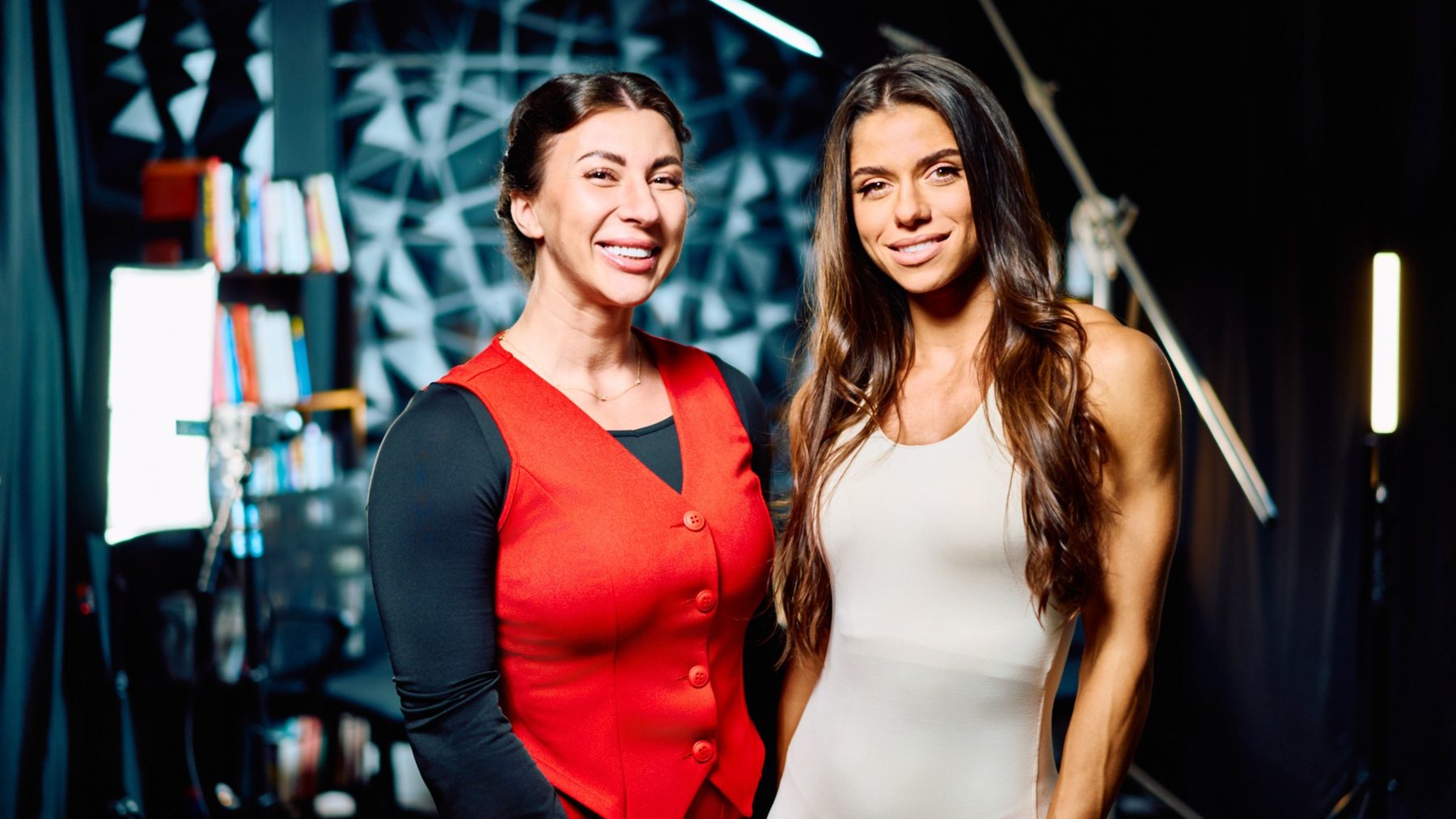
Why female athletes walk away from the stage
Diana won her pro card at the Olympia in Las Vegas. Then came pro shows in Baltimore, Tampa and Prague — and that was it. She got married, had a baby and ended her competitive career.
She’s honest about why: exhaustion, and no idea where to go next. Back then, getting to a show in America meant scraping together her last dollar. She had no posing experience and no team to do her makeup, dress her and coach her. Everything she learned, she learned from her own mistakes.
I understood it was a road to nowhere, when you live only for some end goal and don’t really see life.Watch this moment · 3:02
I’ve heard versions of this many times from the women I’ve prepared for the stage. And every time I think: quitting because you’re exhausted isn’t weakness. Weakness is spending the rest of your life telling yourself it “just wasn’t for you.”
How to return to the stage after a long break and having a baby
Diana had wanted to come back for a long time, but everything got in the way at once: her visa expired, COVID hit, her embassy interview was canceled. And once the family moved to America, her husband, as she puts it, kept “buzzing in her ear”: you live in America, you have a green card, every door is open — why aren’t you going back?
In the end, the decision came from within. She and her husband already prepare athletes and travel to shows, and she wanted to see what she could look like now.
Without a goal, it’s practically impossible to get into shape — that’s what I realized.Watch this moment · 4:53
Her prep was calm, with nothing extreme. For about eight months Diana was in a solid building phase. In August 2023 she went into a calorie deficit, and by November she was already lean — well before the show. Her diet was flexible, nothing forbidden; she had regular blood work and never let calories drop too low. Her formula is very close to mine: build the shape gradually, ease into the cut, and ease out of it just as gradually.
The hardest part wasn’t training. It was living in contest shape: a child, work, family responsibilities — and a body that, in her words, “tries every way it can to knock you down.” Diana admits that at one point she wanted to give up. She didn’t.
 from 11:44
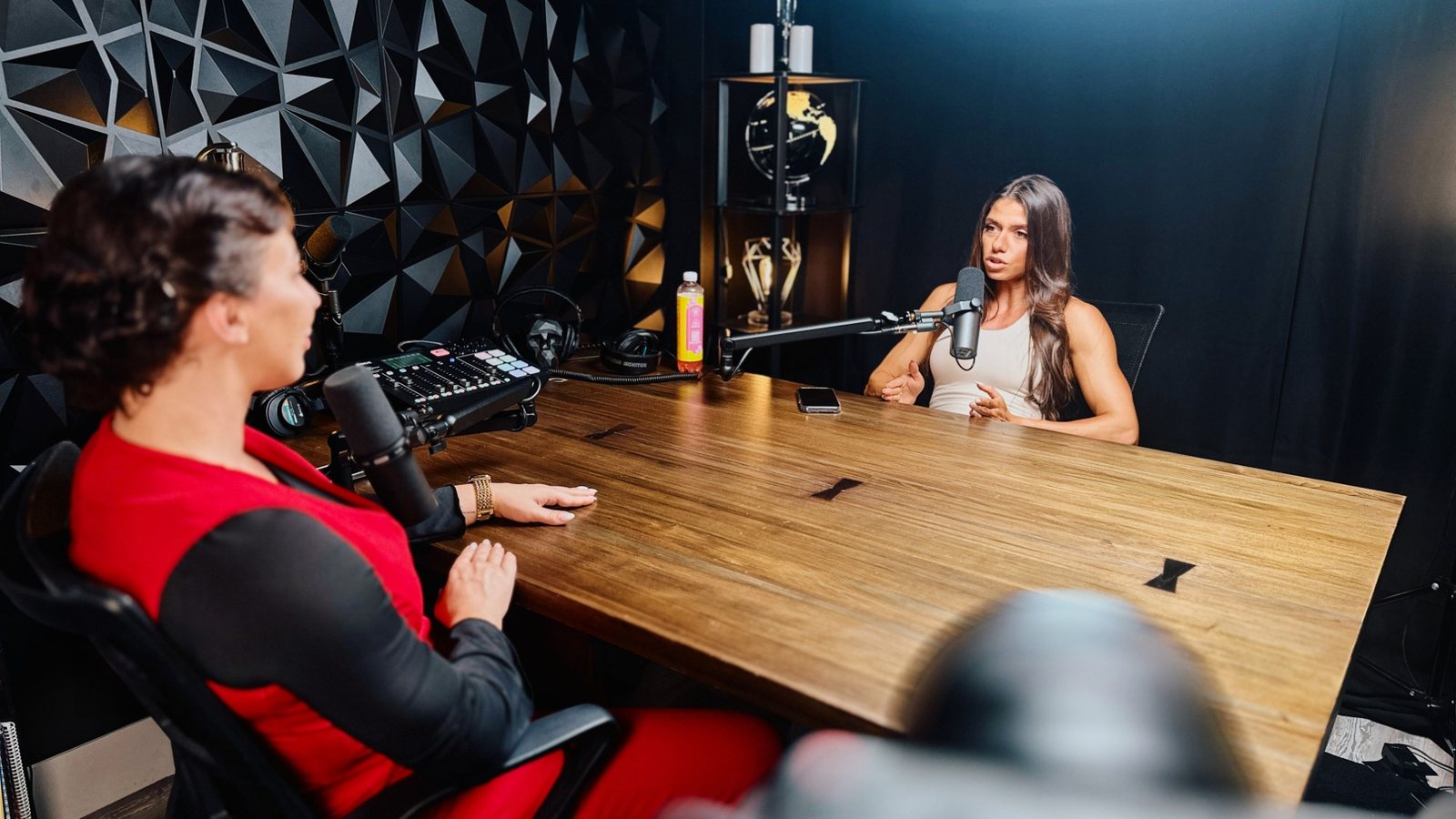 Shot by ProStudio1
What the American stage is really like
The warmest part of our conversation was how Diana talks about the show. She was terrified: she hadn’t competed in eight years and knew the level had gone up across the board, especially in posing. But once she was on stage, the anxiety was gone. Before she even went out, judges came over to tell her how many layers of tan to apply under that lighting. Backstage, people were supportive. Her husband and a friend were there, taking photos and bringing her water.
I was standing on that stage just plain happy.Watch this moment · 13:09
As for the popular myth that American bikini competitors are “huge,” Diana is matter-of-fact: bodybuilding is an illusion. On stage the women look alike; backstage one is smaller, another bigger. Bikini physiques really have gotten a bit bigger and harder, but posing and the new poses do a lot of the work. And then she’s candid about what it takes to be competitive.
If you want to be competitive, you accept the rules of the game.Watch this moment · 11:04
Posing starts on day one of prep
As a posing coach, I sign off on every word here. To me, posing is an art form of its own: every body has its strong points and places better left unemphasized, and the work is like that of a good painter. I asked Diana how long before a show you should start posing. Her answer: always.
As soon as your prep has started, posing has to be constant.Watch this moment · 37:04
Practiced poses help the muscles “settle” beautifully, and above all they give you confidence. In her words, even in great shape, without practiced posing you still feel on stage like something’s off.
 from 37:00
How an athlete moves to the US: a green card through the EB-1A “talent visa”
Diana knew America long before she moved here. She came for competitions, and five years ago the family flew to Miami to have the baby and spent three months here as tourists. Ever since, she’s had what she calls a cherished dream: to move.
Diana describes her path to a green card as relatively easy — compared with people who spend years trying to get their papers. But it was easy only in terms of timing. First her visa expired, then COVID hit and her embassy interview was canceled. In Italy, her visa was denied. A month later the family flew to Mauritius — far away, mid-pandemic, on a hope and a prayer — and got the visa.
 from 21:33
In March 2022, Diana and her family arrived in America, and she went straight to work on the paperwork: digging up materials from her past competitions and getting in touch with a lawyer. Preparing the case took six months, and the green card came four months after filing. Friends of hers who got the same visa say that’s very fast.
Four months later, I get my green card.Watch this moment · 22:55
Diana’s green card came through the category for people with extraordinary ability — EB-1A, often called the “talent visa.” Her story makes the key point clearly: for an athlete with a career behind her, competition results aren’t just medals on a shelf; they’re also evidence for an immigration case. I went through my own EB-1 green card process, and I know how much work hides behind those “four months.”
What changed once the documents were in hand? Calm and stability — knowing who you are here and why.
A feeling of calm once you have your documents.Watch this moment · 23:35
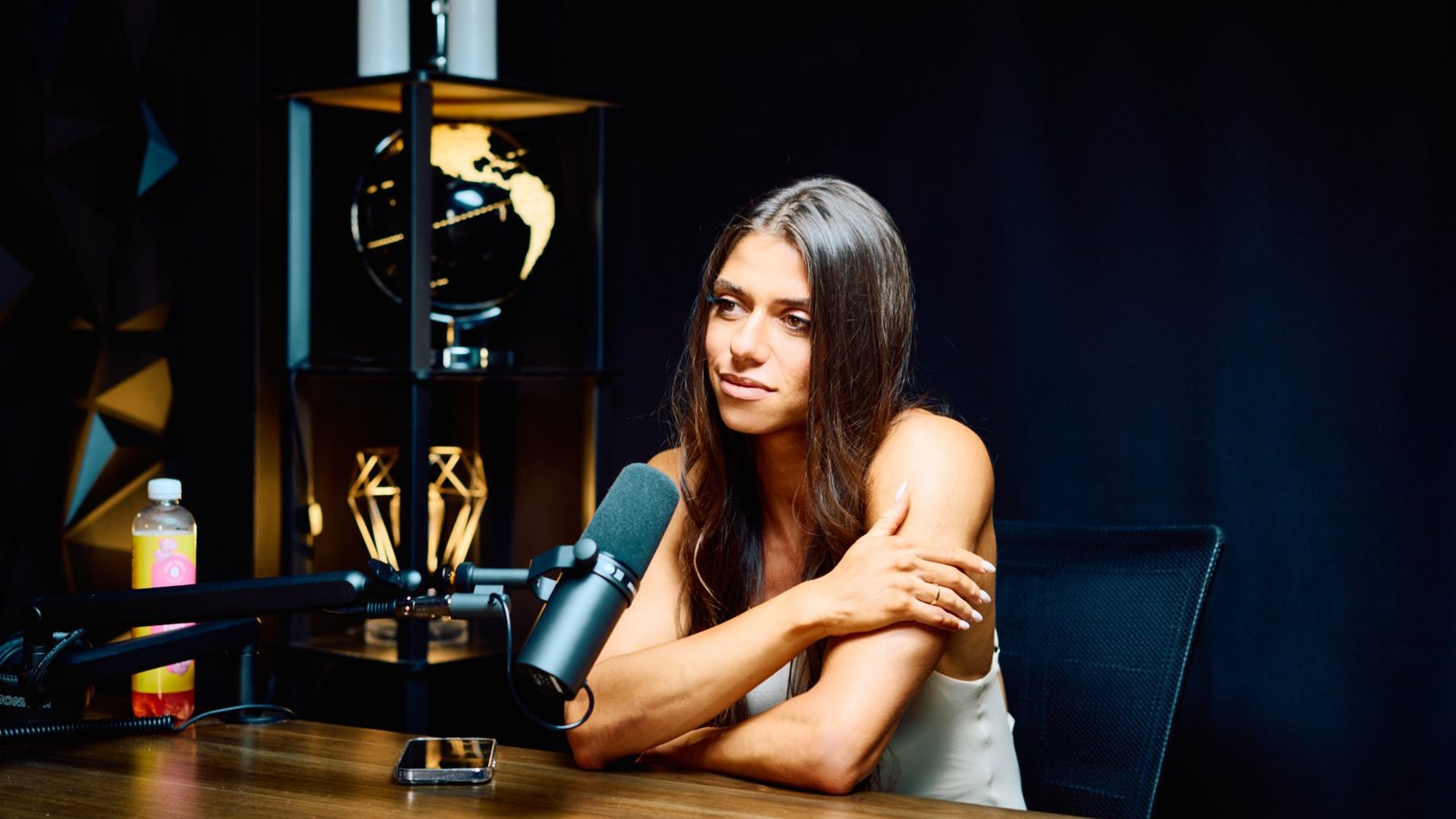 Shot by ProStudio1
There’s a funny detail, too. When Diana got her green card, she also updated the address on her pro athlete card — and at the show she was unexpectedly announced as an athlete from the USA.
Why Miami
They didn’t weigh it much, Diana admits: they’d been to Miami before and had friends here, though they did everything themselves. The city drew them with good living conditions, the weather and a well-developed fitness industry. Yes, it’s gotten expensive, but in her view it’s still fairly safe. She’s seen New York, too, but didn’t want to live there.
Immigrant depression and English: the first year in America
Immigrant depression, in her own words, “hit a little”: she missed home, and her eye started catching on downsides you don’t notice as a tourist. But she still had her coaching work, her family and her son around her — there simply wasn’t time to dwell on the bad.
The language was the hardest part. At her son’s daycare, the kids speak Russian all day long. Diana deliberately hired an American trainer who “swallows” his words, talked with him through a translation app — and six months later she was speaking.
Without the language, it’s very hard.Watch this moment · 45:40
How to balance motherhood and sport
When I asked about her secrets, Diana first said she doesn’t have any. Then she described what I think is the real secret: living not on bursts of enthusiasm but by rules you set for yourself. Consistent action, attention to your child, and leading by example.
I try to take care of the basic needs and just give my child attention.Watch this moment · 26:23
Her son now does artistic gymnastics. Diana herself came to the gym from zero: no sports as a kid, a complex about being skinny, and three pairs of pants under her jeans to look bigger. After her story, all the talk of “I just don’t have the genetics” doesn’t sound very convincing.
The right to doubt
What moved me is that Diana doesn’t pretend to be an iron lady. She says honestly that she doesn’t know whether she’ll keep competing: the conditions are tough, you pull yourself away from your family and your work, and the competitive fire she once burned with is weaker now. Too much overthinking — and bodybuilding demands focus.
And still, she gave advice I’d hang on the mirror of every gym.
Judge your actions, not your emotions.Watch this moment · 1:07:33
What you did today — that’s what counts. Not your mood, not your fear, not the thought “what if it doesn’t work out.” At the end of our conversation, Diana started listing everything she’d been through on her own: the prep, the move, the paperwork, the hard roads. And it seemed that, for the first time in a long while, she saw the whole journey at once. To me, that’s the real result of her comeback — even more important than the top 10.



 Kristina Samofal
 Photo & Video Production