

How to Become an Electric Car Engineer Without Courses and Build an Electric Porsche
I’d long wondered whether you can become an engineer from YouTube, with no courses or degree, and what an electric car built on an old Porsche really costs. I took those questions to Pavel Tolstiy’s garage. He trained in international finance, came to America in November 2014, and now builds electric restomods starting at $350,000, with a queue booked a year ahead. What struck me most was that he taught himself mechanics of materials, C++ and 3D printing without paying a penny for education, and that his answer to the words “it’s impossible” is always the same: I’ll do it.

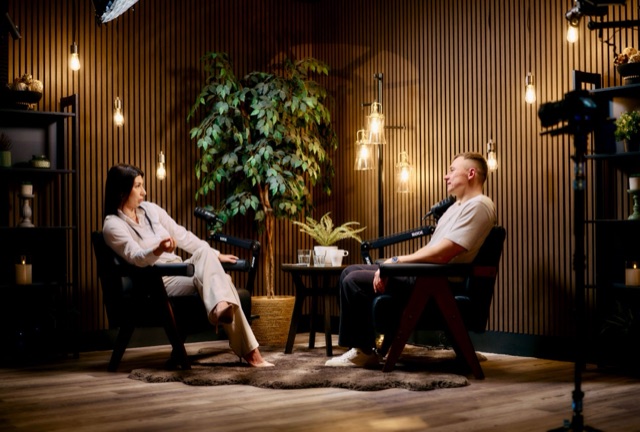
KristinaHi, everyone. You’re back on our channel, where we talk about the success of extraordinary people who live in the United States. Usually we’re in our familiar setting, over a cup of tea, but today we’re in a garage, friends. We’ve come to visit an engineer, a remarkable specialist named Pavel, who’s going to tell us about his success in the world of electric cars. Hi, Pasha.
PavelHi.
KristinaTell us about the coolest project you’ve done in all this time. The one you can brag about. I’m not talking about the hookah you invented. Yes, friends, Pavel invented a hookah too. It looks pretty interesting, and Pasha even wants to patent it.
PavelYes. Of everything I’m proud of, I’m proudest of this. It’s my biggest project so far: in time, in investment, in significance, in resources. I’m not talking about the financial side, I’m just talking about time.
We once took this car to a show, and some old guys walked up to us. Gray-haired old guys, maybe sixty or so. And you could tell they weren’t just casual onlookers.
KristinaConnoisseurs.
PavelNo, you could tell from looking at them that they were engineers. They were walking around incognito, looking at what was going on at the show. This was right after we’d built it: we drove it out in February, polished it up a little, and in March we went to the show. The car was four months old, and it looked, well, very interesting, let’s say, not the way it looks now. And these two old guys came up, watched it drive, and asked, “How many years did this take you?” “Two months.” “That can’t be.” “It’s true.”
Here’s why I’m proud of this project, and I’ll explain it now: there’s no work like this in the world, and no project like this in the world. In the world of electrification, specifically conversions, there’s no culture yet. A lot of people put an electric motor into some car, and it drives. But very often it has no air conditioning, no proper braking system, no proper dashboard, none of what a person expects to find in an ordinary car. And that took us 70% of the time. So the car was up and running in two months, and then we spent almost three more years bringing it up to a user-friendly car.
If you wanted to buy something like this anywhere in the world, you couldn’t. Well, let’s say, on a Porsche, definitely not. There are similar projects, I’ve seen two or three of them in the world, but there the price of the car starts at 800 thousand. Ours starts at 350, theirs at 800. You see? It’s a completely different level of investment: millions have gone into them. There’s probably nothing like this here. Whole workshops work on those, they’re serious design bureaus. And here it’s just me. This whole project is me alone. There’s nobody else here.
KristinaYou and YouTube.
PavelAnd Pixel. The head mechanic in this establishment as of today. He’s the chief tester. He got into the frame somewhere.
KristinaYour life path. Why electric cars? Why engineering? How did your story as a specialist in this field begin?
PavelHonestly? With problems. With big problems.
KristinaWhat did you study?
PavelOfficially, I’m a specialist in international finance.
KristinaAnd did the idea of working on cars occur to you back when you were at the university, or was it after?
PavelIt was my toy. I had a big family company where we earned big money. Very big. In Ukraine I spent $10 to $15 thousand a month on these toys. That gave me some experience. I wasn’t building cars like these, I was building different ones, but I played: I broke them, wrecked them, repaired them.
KristinaWho taught you all this, anyway?
PavelNobody.
KristinaGoogle to the rescue, friends. Want to be an electric car engineer? Open Google and learn.
PavelWell, not exactly. Not exactly. Look, I started doing this in 2004. When I more or less settled in, I’d just graduated from the institute and started working seriously, I had more free time and, naturally, money. That was exactly the peak of our company’s growth. And I was into racing: circuit, drift, drag, and so on. And that’s expensive. But not only is it expensive, you also have to understand it all yourself, otherwise you won’t get anywhere. I won a lot, I lost a lot, but it doesn’t matter: I gained plenty of experience. So I had to figure things out myself, take engines apart and put them back together myself, deal with the wiring, with the control units, all of it, to get the maximum out of whatever you’re driving. Because none of the hired people will tune it to the full hundred percent limit for you, they’re all afraid of breaking something. And if he breaks it, you won’t pay him. So they all left a 3 to 10% margin in their work so that you could drive away from them. But to win, you need to have 100%. So I found that last edge myself. Very often blowing up engines, breaking transmissions, blowing up cars. In short, by what folks call trial and error.
But that was because back then, first of all, there was no such database on the internet. YouTube wasn’t as developed then, there wasn’t that much information. Learning anything on your own back then was practically, well, not impossible, but very hard. Now it’s many times easier.
KristinaSo basically, you put $10 thousand a month into a toy, broke it. Next.
PavelWell, that’s how it was.
KristinaWell, not bad, not bad, of course.
PavelThe only thing I could do right away was fix cars. Fix and rework ordinary gas-powered cars.
KristinaSo you didn’t start with this business right away?
PavelNo, of course not. First I got a job at one company, then I worked for half a year at another. The first thing I did was build cars. I built big pickups, tuned them for people.
KristinaSo you didn’t clean toilets? In the last interview we found out that if you want to achieve any kind of success in the United States, people usually start at the very bottom.
PavelNo, here the situation is very good, and it could be useful to your viewers. How did I get the job and what job did I get? I came here in November 2014. On November 14, if my memory serves me. And on the 17th I went to work.
And now pay attention. I was recommended to one man, the owner of a company. I went to see him. By then I already understood how much mechanics were paid. The average mechanic was getting $12 to $15 an hour back then. I came in and said, “I want 25.” He said, “Who are you, anyway?” I said, “Well, I’m here from so-and-so.” He said, “And what do you have? Work authorization, Social, everything?” I said, “I have nothing, but I want a lot of money.” He said, “Okay. And what can you do?” I showed the man some video material, and he said, “Okay, tell me about this car.” They had five or six cars standing there. Any car at all, and I told him everything about it in detail, everything that’s in it, how it’s installed, what the nuances are. “Okay, let’s do this.”
I had come with a friend then, a buddy of mine, we flew here together. He said, “Here are two cars for you.” We had forty days, right up to New Year’s. The Paris–Dakar rally was on then, and the man was sending two cars there for advertising. He said, “You have forty days to build these two cars. Here’s the full set of parts, here are two new vehicles, they have to fly out by plane in forty days. Can you handle it?”
But at that moment it was the first time in my life I had seen that car. It was a Tundra. I had never worked with a Tundra before, I had worked with other cars. He said, “If you pull it off, I’ll pay you the money you want. We’ll work it out together, I can give you some advance during the work.” And when I built that car, he was very surprised. Very surprised. My partner and I built it together, built it perfectly, and went to test it around the neighborhood. Nothing broke, everything was great. He was very surprised then that I lived up to what I’d said. He paid me.
And then that car flew out by plane, I think there was a rally in South America then, in Argentina, in Chile. And now a funny side note. I gave the car’s driver a briefing. I said, “Look, this car is built so you don’t jump it. You can drive fast off-road, climb over things, but don’t jump. It’s not designed for jumps. Got it?” “Got it.” The first photo from the race: the car is half a meter in the air. I said, “Well, I told him.” And yet nothing broke on them at all. The car then came back to America, we serviced it, and then it was sold on somewhere abroad. And even there nothing happened to it.
That was my first experience here. And after that the company owner had no doubts about my qualifications. What am I getting at? That you need to come here as a professional in at least something. If, figuratively speaking, back in your country you were into “buy and sell,” there are a million people like you here. Here they need professionals in any field: cosmetology, automotive, the repair business, sports. So if you’re a professional in your specific field, here you’ll always be...
KristinaAn extraordinary person.
PavelBut if you’re like what everyone back home is used to, “bought it there, sold it here, scraped something together there, cheated someone here,” that doesn’t work here.
KristinaHow did you get to building electric cars? Was there any investment? Did anyone help you with this business?
PavelI found a guy who built restomods. A restomod is an old body with new, fresh components installed in it. He happened to be discussing a project with a client, and I showed him my work experience. We already knew each other from before, and he had a fairly good idea of who I was. “Can you handle it?” “I can handle it.” And so we took on a restomod project based on a Corvette C2 or C3, I don’t remember anymore. A sports car from either 1970, or ’56, or ’76, I don’t remember anymore.
Here’s the point. The client had bought an old car, a Corvette sports car, a really old one, a really old toilet, to put it in plain Russian, and I had to turn that toilet into a piece of candy. All the old cars like this one, from those years, can look great, but they’re absolutely not suited for everyday use. And the main goal of that project was this: the client, who lives in the Emirates, has the exact same car, an original, just sitting in his garage as a collector’s piece. He wanted an exact copy of that car, but one he could drive every day. And there’s only one way to do that: install everything new inside, a new engine, a new transmission, a new interior.
KristinaSo it’s a new car on the inside? Or did you keep something?
PavelWe kept only the body. Everything else got torn out. Yes, and that’s how we launched this project with him. It was my first project of this kind. Not about electricity, but about converting old cars. It’s a specific business, and it involves both restoration and a huge amount of custom work. I think I finished that project for him in six months. We completely wrapped it up in six months. And usually a project like that takes almost a year. We did it very fast, and I brought in some people. And that’s when I started doing engineering. Before coming to America, I hadn’t done engineering at all. I knew how to take things apart and put them back together, but I had no idea what CAD systems were, what CNC machines were, how all of this gets made, how it all works, or what strength of materials was.
KristinaBut you got this knowledge somewhere.
PavelYouTube. As funny as it sounds, YouTube. I learned, let’s say, the basics. I saw the task: I need to make this thing to put into this old car. But there was no way to buy such a part, none at all. I started looking into how to produce it, how parts get machined. And right around then a special kind of software appeared that had become more open, and I started learning it.
KristinaJust YouTube, friends. You open it, you watch, and the next day you wake up a specialist. Me, for example, I doubt it would work out like that for me, honestly. If tomorrow I suddenly decided to read up on how to do engineering and how an electric car is even put together, I have serious doubts that I could build cars like that.
PavelMaybe my wife is right that I have some kind of talent. But basically I don’t believe it, because what I did was just sit down and stubbornly watch videos, try things, draw something, make something by hand. Then I got my first 3D printers, and I had to print things on them, again without knowing anything at all. The 3D printer arrived new, but broken, and I had to fix it myself right away.
KristinaYou drew. You create the projects yourself.
PavelAbsolutely. It’s like a 3D project, modeling. In 3D modeling there are two directions: virtual and real. I’m in the real one. Virtual is games, animation, cartoons. And real is what you can create using various methods: printing, CNC machining, welding, well, there are lots of different options. Anyway, we got off topic. When I was putting together that first project, the Corvette, I started digging into all of this, because what I couldn’t make myself, I couldn’t buy. Once we created that project and finished it, the next one began.
PavelThe next project was already based on a Porsche. It was also a restomod, a little different, but similar. And at that moment I met my future partner in this project. He asked whether I could restore some of his cars for him, Porsches, as it happened. We talked and started small. I said I had a job and couldn’t give it my full time. He said, “Fine, time isn’t a problem for me, you can come in the evenings, you can come on weekends.” He has his own indoor garage. That’s how we got to know each other and started working. Little by little, small jobs: I rebuilt an engine for him, did the electrical work on one of the cars. We just started doing all of this bit by bit.
And at some point that Porsche project ended. The work was done, and I was left in limbo. We were talking, and I said, “Look, I just finished that project, I’m looking for work, so I don’t know where I’ll be tomorrow.” He says, “Let’s make something together.” I say, “What would you like?” He says, “Let’s build something like what you did with the Porsche.” I say, “We could, but two companies in the world are already doing that, with millions invested and years of work. Not just money, but years of development, and they have a finished product.” He says, “Okay, so what do you suggest?” I say, “Look, electric is a new field. Let’s build something nearby.” He says, “Can you do it?” I say, “Yes.” At that moment I didn’t know anything. Absolutely nothing.
KristinaYou’re just kind of magical. I love it. You’re going to motivate so many of our listeners right now.
PavelYou know, I have a drop of Jewish blood, and Jewish people have a great joke. Do you know how two Jews meet at the border? One says, “Do you want to buy, I don’t know, potatoes cheap?” “I do.” “Do you have money?” “I do.” “Do you have potatoes?” “I do.” “We’ll meet tomorrow.” The two Jews part ways: one goes looking for potatoes, the other goes looking for money.
So in my field, basically, I never turn down work. You tell me today, “Let’s build a spaceship,” and I’ll say, “Let’s.” And in a week or two, say, I’ll say, “In two weeks I’ll give you a plan.” And within two weeks I deliver a work plan for that project.
KristinaElon Musk can take a break, friends.
PavelI mean, with the knowledge I have today, I can figure out the concept of building basically anything, give or take, and then dig into the details as the project goes on. Same as it was here, when I told him that yes, I could build this. I knew I could buy a motor from one company, a control unit from another, and somehow connect it all. There were ready-made solutions you could assemble somehow, and someone had already done it, maybe not on a Porsche, maybe on another car, but it had been done. I understood that, give or take, I’d get it running somehow. And that’s basically how it turned out.
When we started this project, with this particular car, my partner is the financial founder of this whole company: he puts in the money, I put in the knowledge. It turned out funny: both he and I didn’t understand what the project would be. We didn’t know what the end goal would be. We just decided to try. Like, let’s make a production run. I say, “We need to build a series right away, because building a single car is expensive.” So that’s more or less how we started.
And, actually, I got the body, I think, on December 1, 2019, I don’t remember exactly. We bought the car then for about 20 thousand, give or take. This car is from ’84. It came to us without an engine and without a transmission: we didn’t need them, which is why it was so cheap.
And then it gets funny, because the original approach was to do it cheap and fast, and basically that’s how it worked out. This particular car, which came to me on December 1, rolled out under its own electric power on February 1. So I built it in two months. Maybe two and a half, give or take, I’m mixing it up. And it rolled out very cheap. Very cheap. I can’t give the numbers, for various reasons. I can tell you later the final figure, what it costs now.
PavelWhen we drove out in that car, really drove out, it was already fast, the wheels were spinning. Everything looked great. We realized the project was alive. And then the next process began. Because from a cart on wheels to a finished product for a user is just a chasm: ride comfort, the feel, the sounds. Don’t forget that this body, this project, turns forty this year. Well, next year, to be exact.
KristinaHow long did it take to create this project and bring it to the finish line?
PavelNow a few numbers, but not financial ones, more real ones. In projects like this there are always two figures: the number of working hours of the person who does everything by hand, and the number of hours of the engineers sitting at their computers. Often the computer-side engineering takes more time, because this project is built on the small-batch assembly principle that a factory uses. When you look at a factory and see all those robots, that was preceded by thousands of engineering hours at computers, creating all of it, testing it, writing the code and everything else.
This project is built on the same principle. I decided right away to make it small-batch: our plan is, say, to build 25 cars. But from my own experience, the more manual labor there is in a car, the greater the chance of error. A person can show up in a bad mood, after a fight with his wife, after some night of partying, tighten one bolt wrong, and that can end up as the complete destruction of the project in a customer’s hands. That’s damage to the company’s image, big losses, a whole pile of problems. So I made the decision to build it in such a way that the maximum amount of work is done on machines and in factories.
Say I designed the battery pack, it’s sitting right here next to us, and only about fifteen percent manual labor is left in it. Eighty-five percent is done at the factory, from drawings, from files. The first pack I assembled myself took a month; now a guy like me, or any other ordinary person, will assemble it in three days. The cost basically doesn’t change; what changes is the investment in engineering. The first pack I built, figuratively speaking, by hand, part by part, ordering them from different places. Now all of that is already in files, in drawings. You press one button, the order goes to the factory, and all the prepared parts come back to me from the factory, already bent, already welded. You just take them, fit them together, insert, close it up and forget about it. And about ninety percent of this car is made that way. All the modules in this car are created on this principle: manual labor is absolutely minimized, because manual labor means mistakes.
When we started, the car rolled out in three months, like I said, a little cart. And then it took us another… up to now, really, so almost three years already, I’m still working on developing this car. We have three cars in partial assembly right now, but the work on this car isn’t all finished yet. In terms of my engineering hours, it’s probably about six thousand.
KristinaSo some of your personal innovative improvements come year after year? You keep coming up with something new?
PavelIn this car practically everything is created from scratch. Original Porsche parts, and I’m not talking about the exterior, I’m talking about the technical side, are about ten percent of what’s left. I had to develop from scratch the rear suspension, the battery packs, the entire brake system, the entire steering system, ABS and traction control. And build again a high-voltage air conditioning system, which doesn’t exist at all.
KristinaAgain, you did all of this yourself.
PavelYes, I figured it all out myself. I had to create my own gauges that look like the factory ones. I even had to create basic interior elements, because what you can buy is forty years old. That awful plastic that cracks, it doesn’t look great.
KristinaVery interesting.
PavelThe key is on the left. Put it in, turn it, and it will start.
KristinaI like it. Friends, are you ready for the sound of an electric car? No, the other way.
PavelRight here. That’s it, it started. Now the lights will come on to show that it’s parked and ready to drive.
KristinaAll the gauges are working. Wow! So there won’t be any characteristic sound at all?
PavelWell, if you press the brake… Press the brake.
KristinaWhere am I supposed to press it? Someone with long legs was sitting here.
PavelNo, press the brake.
KristinaI pressed the brake. Friends, I’m not letting go of the brake, I can’t, otherwise I’ll drive off.
PavelIt won’t let you. And there are speakers in there with a special sound that imitates an engine. It’s even more for safety than for the feel of it: when you’re driving through the city, pedestrians can’t hear you, and you’re approaching quickly.
KristinaListen, that’s nice. A pleasant purr, I like it.
PavelWith the gas pedal the sound rises higher. It’s fully adaptive.
KristinaLike the way a car normally runs, a kitten’s purr.
PavelWell, yes. Now press “park,” and it will disappear.
KristinaI like the steering wheel. A certain minimalism, but at the same time a very classic, cool option.
KristinaRight, and what you said about the gauges. They’re all cut out like the old ones, absolutely.
PavelBut here, for example, it says “amps,” that’s when you’re drawing power, and when you have regeneration, it’s green. Here’s the voltage: right now there are 365 volts in the system. This is the motor temperature, this is the battery temperature, and this is the charge level. So, 75% charge.
KristinaHow unusual: so many interesting dials.
PavelWell, that was Porsche’s design, they had five gauges.
KristinaThis actually looks really interesting.
PavelIf you sit in the same car from the same year, you’ll see exactly the same gauges, only they’ll have the regular, standard labels.
KristinaOkay, and all these little buttons, is that your invention too?
PavelIf it weren’t for this console, you wouldn’t realize it’s electric. Because the gear shifter used to be here. Now there’s a wireless phone charger here, cup holders that never existed here, a glove box. The drive buttons, and this is one more control, one more gadget. Everything here is programmable, everything goes through the touchscreen.
KristinaAmazing. So it all works, it’s all set up.
PavelAnd down below there’s one more thing added that cars usually don’t have. In the center, inside the console, see, they put it on that side? There’s a little spot for a water bottle.
KristinaOf course, for water.
PavelBecause these cars never used to have that.
KristinaWell, like you say, discomfort. But here it’s very comfortable, I think.
PavelAll of this cost me hours and hours because of the ideas and the redoing.
KristinaGreat. What you said about the detailing, look at this.
PavelThe seat belt, see? The little red one. This is aluminum now, and it used to be plastic. And here too, look, it used to be plastic.
KristinaVery beautiful.
PavelSo there are a lot of little things that had to be redone, because the factory ones were, well…
KristinaSo the sound, navigation, CarPlay, it’s all already here. Okay, and in the back I see seats, for a purse.
PavelWell, that’s for later too. The back is a coupe.
KristinaAnd did you develop the design yourself too?
PavelMy partner develops the design, the color scheme is all his. I have very little to do with design, because it’s not my thing, I’m an engineer. They show me a little check pattern, a little stripe, and I don’t like it, and they say, “But it’s beautiful.” It’s not that I don’t understand, I just don’t have that sense of taste, that couture kind of sense. I know how to connect the metal so it works and looks good, that I know. But what type to choose… Anyway, what I want to say is that when you sit in a car like this, it’s as if you end up in some other dimension.
PavelWe needed to create our own bumpers and body kits that would fit this body. All of that was put into this, and I’m still redoing something even now. This car has been driving in this form for almost a year, and over the year we’re putting on mileage.
KristinaAre you doing some kind of upgrades?
PavelYes, we test. Say we don’t like how the suspension works, we replaced the springs. We don’t like how the brakes work, we replaced the pads and rotors. We realized that this car is impossible without traction control, because the power is very high: it spins its wheels, and that’s very dangerous. We’re developing traction control. We drove it and realized that in the rain, because it’s still a Porsche, even though the balance is already almost fifty-fifty, there’s still very little safety for people.
KristinaZero.
PavelThere are no airbags there, only seat belts. This car didn’t have ABS. And it appeared in this car…
KristinaAn ejection seat.
PavelFiguratively speaking, the closest relative of this car with ABS is ten years younger. So I’m building here… right now, for example, I’m building my own ABS entirely. I take some modules, rework them, reprogram them, integrate them into this body. Because the age of this car’s customer is fifty-plus. And the car is very daring.
KristinaVery daring. So if I decide to hit the gas, it will go?
PavelIt’ll spin like a top.
KristinaWow.
PavelIt has an electric motor with a maximum power of about 650 horsepower. That’s a lot.
KristinaSix hundred horses. Sporty.
PavelPlus they’re electric, they go straight to acceleration.
KristinaHow many seconds to a hundred?
PavelWe got 3.2 to a hundred. But in theory, with good traction you can get even three seconds.
KristinaA spirited horse.
PavelIt’s a very fast car, and that’s why it ends up being fairly dangerous. I have to make every effort so that nobody gets killed. We had a man, we were discussing it with him: he wants to buy two cars, one for himself and the second for his wife. We went for a drive with him.
KristinaUnexpected, though.
PavelUnexpected.
KristinaAnd where is she supposed to drive it, I’m embarrassed to ask?
PavelSlowly, hesitantly, around town, nice and easy.
KristinaThen why so many horses?
PavelAnd he says, “It’s all great, but my wife will get herself killed. Can you do something so that she drives slower?” I say, “Yes, we’re still finishing traction control here, and there will be a power setting.” But even I don’t drive this car above 45% of its power. It’s just scary.
KristinaWell, it honestly feels really nice, I have to tell you.
PavelYou’ve just never driven those cars. If you got into an original, you’d be blown away. First of all, they stink terribly. The engine is old, a seventies design, air-cooled: it has no coolant, it’s cooled by air, and everything that heats up around the engine gets blown out. They reek of oil and gasoline. On top of that, they’re very loud because of all this. And the biggest problem is that the technology is old, and they basically break down. You head out, drive around over the weekend, and right away you see… It accelerates very fast, and you’re riding in this tin can at a hundred sixty to a hundred eighty kilometers an hour. Let’s just say these cars weren’t built for that: when this car was designed, its rated power was 200 horsepower, and its top speed was something like 150.
PavelBack to it. Here we have two orange cables, see, these thick ones. All the current runs through them, 400 volts. They have a special double braiding, so you can’t just cut them. If you touch them, it could kill you.
KristinaWell, that’s true of all cars.
PavelHere you can see them, and a little bit more at the back. And over there, deeper in, is the Tesla motor itself. This is the charger, and here is the high-voltage junction box for the cables. Again, the orange cables run from there to here, and there’s a ton of stuff inside.
KristinaIs that glass?
PavelIt’s acrylic glass, made specially for the show, for the shock effect when we drive. This space is sized for carry-on luggage, you put yours in. Here we have the air conditioning, and over there is the cooling. For the most part, you can’t see anything else here. And from below, this is what it looks like inside: there’s the motor that you see from above, here is the battery pack, and on top there’s just a piece of the air conditioning. This frame is also assembled by hand. No, it’s all cut at the factory and then assembled by hand, basically like the regular chassis on any car. This is what I’m proud of and what I love about this project, one of my favorite things, because it works, and it looks beautiful, and it’s efficient, and it gives you the feeling of modern handling. There used to be a terrible chassis here, and now this car has a proper one.
KristinaIs all of this a 3D printer?
PavelYes, there it is. It gets drawn, then printed, and glued together from pieces. There’s the same chassis kit here too. It’s roughly like this, only here the arches are slightly widened, so the wheels are a bit different.
About six thousand hours of my engineering time went into this, and about as much physical labor. I took this car apart and put it back together three or four times. This is the fourth or fifth generation: the first one had one set of battery packs, then other battery packs, then this motor, that motor, this suspension, that suspension. That’s how we moved forward, and we had to take it completely apart. There’s no other way. But right now this product is 99% ready for anyone to get in and drive around the city on errands.
PavelAnd here the question arises: why these particular cars, why I do this. When you have a lot of money, you can go buy a Ferrari, a Lamborghini, a new Porsche, any other cars — they’re more or less available. I can go buy one, you can. But the funny thing is, it’s not about the price. It’s that no matter how much money you have, you can’t buy many cars like these. Our production plan is four to six cars a year. Say Ferrari produces even its most expensive cars at fifty a year or a hundred a year, it doesn’t produce anything like this. And that’s where there’s a huge global market right now — specifically in restomods. That’s what a restomod is: an old body with new guts. Right now all the world’s manufacturers are moving in this direction, and so are small companies like ours. Because of the plain old wow effect. I drive this car into the city, I’m in traffic — a Lambo is driving by, a Ferrari, a Corvette — and everyone looks at me. You park the car on the street among all these supercars, and everyone photographs this one.
KristinaSo we’re saying that a car like this is more about status.
PavelYes. In the car-enthusiast world today, restomods mean you’re a wealthy person with taste. Because if you show up at a gathering in a regular Lambo or Ferrari, people look at you like an upstart.
KristinaSo it’s not exactly bad taste, but living here in Miami, for us seeing any…
PavelThat’s totally normal, really. It’s the same in Los Angeles, in Las Vegas. Because athletes in America are paid a lot — American football, basketball — and they’re all young guys, and they drive cars like those. And when a guy in shorts up to you-know-where steps out of that car, the value of such a car somehow drops. And a person in a suit getting out of one looks kind of silly. But when someone arrives in a classic Porsche, an old Mercedes, or an old Alfa Romeo restored to perfection, it earns far more respect and appeal than if you roll up in some new Porsche. Porsche and Ferrari themselves have exclusive limited-edition models, but those cost two or three million.
KristinaFriends, can you imagine?
PavelThis is just a box that then gets filled with all the parts; the paneling, the interior, some components are made completely from scratch. These elements are a busbar, the so-called bus, which also connects the batteries. It’s copper, specifically for conductivity. This is just what happens to be lying around. These are parts cut at the factory, parts of this box; the connectors get mounted here. These are door parts, I think. And this is the underbody protection, a special one: right under the wheel there’s a little angle bracket. I drew it, sent it to the factory, they cut and bent everything, and there are three of them lying here. This one isn’t finished yet. Cool! And I don’t have to think about anything anymore: I just took it and installed it. Same with all kinds of things like this. This is also one of the beams that holds the battery — it comes to me practically like this, assembled, just needs painting.
KristinaI’m ready for a car like this. I come to you and say: “Pavel, we’re buying a Porsche, keeping the body, and doing all the internals from you, everything from you.” How much money do I need?
PavelWell, roughly… We start at around 350. And then we’re now discussing with a partner a project for another car based on this body, around a million. It will be all-wheel drive, and there’s a lot going on there. But the question isn’t even about money. If you bring me a million right now and say “I want it tomorrow,” I won’t hand it over tomorrow.
KristinaWell, of course.
PavelSo our nearest queue for cars starts January 1, 2025. That is, next year we’re completely booked.
KristinaDid you hear that, friends? I feel like I’ve already underlined so much information for myself today. You know what I like, friends? Interviews like this give you a flood of powerful information. And is there an opening here for a part-time electric-car development engineer? Hire me part-time!
PavelLet’s do it. Here, take this in your hands: this is the car’s rocker panel, drawn up, and it’s all 3D-printed too. Come over here. Isn’t it interesting, the quality of this technology? Hold it up. Look at the gap — it’s like it was cast.
PavelThe part was printed without any fitting, and nobody adjusted it: it just glues on like that, and that’s it. That’s the efficiency of proper engineering: the technology and the cost. I’m not talking about development, let’s say it’s just printing. This one, I think, is three kilograms of plastic. The plastic costs sixty or seventy dollars, and the printing another twenty to thirty. That’s the cost of the part. Of course, hours of development, design, and a whole lot more went into it, but the part itself isn’t expensive.
And the point is, say, for this particular car: you get into an accident and smash this part. They call me, I print it, and it fits perfectly.
KristinaYou just put it on?
PavelYes, that’s it. The bumper’s the same way. Here the bumper is already completely finished.
KristinaAnd what if someone comes and says, “I want it urgently”?
PavelThe only way to make this car urgently is to call every client who has already bought these cars from us and say: “Guys, here’s the situation, how much compensation do you want to wait an extra five or six months?” Say there are three or four clients next year who are waiting. And each one says: “I want 200 thousand each.” So that’s the car plus 800, I set them all aside and build yours first. And the client pays an extra 300.
KristinaNothing personal?
PavelAbsolutely. It’s basically the same system here, it’s just out in the open. We have no goal of moving anything anywhere. There are objectively people who are already waiting, and in good conscience we can’t move them for any amount of money, only if we discuss it with them. If they agreed to wait, fine. But in principle it’s hard, and clients often don’t want to wait. So even if you tell me a very large sum, I don’t think I could persuade them to give up their place in line, so to speak.
PavelHere’s a printed bumper, and, say, a rocker panel. It was developed, there were several revisions: we tried this way, this way, this way, and we liked this version.
KristinaHow dense is it?
PavelInside it’s hollow, with a honeycomb structure. It’s quite sturdy, but not heavy. This is what it looks like. As for body preparation, some modifications are done here: cutting a little here and there. Here’s the electric power steering, which was never in this car in its whole life, and now it’s there. The sound insulation inside the cabin is glued in everywhere.
KristinaStandard sound insulation?
PavelYes, all standard, nothing special.
KristinaI even did that by hand once, I remember.
PavelNow I’ll show you some more parts. This is about our approach. Look, here’s the attention to detail. Would you believe these parts are forty years old? No, they’re really forty years old. These are parts from the old car. They were completely disassembled, gone through, and restored, all the coatings renewed. This old part, a little spring, say, this piece of the pedal is old, and this is new. All of it was specially cleaned, then powder-coated and reassembled.
KristinaAnd it works?
PavelThe plastic is new. It takes an enormous amount of time and resources. And whatever we can’t make new, or where it makes no sense to make something different, we restore. You see all these repair kits, they’re sold. Of course, it takes a decent amount of time, but there’s no other way.
KristinaBut like new.
PavelExactly.
KristinaYour company is already a kind of brand. Let’s not take all of America right now; let’s talk about Florida. How many specialists like you are there here?
PavelI don’t know a single one. This isn’t self-promotion or an inflated opinion of myself; it’s a conclusion I’ve drawn from the facts. My company isn’t positioned as a pure engineering firm right now. I have a separate service that I promote: so far it’s only scanning and a small amount of engineering, because I’m busy here. I don’t market the engineering potential I put into this project for general consumption, because there’s no time for it.
KristinaTell me, how long did it take you to grow to this level?
PavelIt took me five years, starting from zero, to master the following things. So people understand what I’m talking about: this isn’t just part engineering, development in a CAD environment. In five years I completely mastered strength of materials. Strength of materials is how materials fit against each other, stress, fracture, and everything else. It’s quite difficult. The software I work in helps with that. I also learned the C++ programming language so I could write the control units for this machine. I had to learn how to make circuit boards, because they had to be made. I had to get a handle on thermodynamics, airflow, cooling, weight distribution, and a lot more. Not to mention 3D scanning, where I’m now one of the top specialists in the world. I even run seminars on 3D scanning, explaining to people how to scan. I’m not just a user: I know how to set up scanners, how to test them, which scanners are better and which are worse. There I’ve gone really far.
And this is one of the parallel projects. I’m involved in it, but I didn’t design or build it. Here they asked us to redo the brackets and the body: all these carbon parts, the whole car was scanned, and then the brackets were created from the scan. It’s for track racing. A very powerful, very light car; it used to be a Lotus, and then it was rebuilt. It has a very powerful 1,600-horsepower engine. Where this car is supposed to go, I don’t know; probably it needs to fly.
PavelAbout two years ago, an HR person from Tesla reached out to me. We talked. I don’t remember where he got my contact. He says, “I know your work, people have told me about you, would you like to work with us?” There are different development areas there: there’s a head of engineering, and under him five or six engineers, each with a narrow focus. My position would be head of that department. The heads of such a department at Tesla earn from 140 to 180 a year, give or take. Divide that into months yourselves. But then, again, there are taxes and deductions.
Plus, when I started talking with him about it, I asked, “Where should I go?” He says, “You can’t go into a narrow area. You’ll die as a person there, you need to grow. And the head-of-engineering type positions are all taken.” I wasn’t particularly upset, because I have a job. We were just chatting, talking.
And then, when I started learning more about Tesla as a company, partly because I was interested, it was some kind of childhood dream, it turned out the working conditions are really terrible. However that sounds, it’s truly very harsh there. A very harsh schedule, very harsh discipline. There’s no concept of days off as such.
KristinaIt’s easier to just live there.
PavelMore or less, yes. And when I started finding out about other similar companies, it’s about the same situation. As for money, a person with my knowledge can now count on an amount from 120 to 180 a year, give or take. It’s fairly easy to find a job at that level working for some company, not for yourself.
KristinaNot for yourself.
PavelFor yourself, it’s down to luck. It depends on the specialist: how lucky you are, how much you know, how you work. I chose to work for myself for one simple reason: I’m a creative person, however strange that sounds, and my brain’s efficiency starts at four in the afternoon and runs until about six or seven in the morning. So all my engineering I do at night. I turn off my phone for everyone and disappear. Thank God I have a wife who supports me.
KristinaYes, because not sleeping at night…
PavelThere have been weeks when, basically, I worked every night straight through. Say, from four or five in the evening until seven or eight in the morning, then I’d go to bed. Naturally, I slept during the day, woke up in the evening, and sat down to work again. I don’t know why, but the daytime is hard for me. During the day it’s easier for me to work with my hands, so my brain can rest.
PavelBack to the question of what to come here with. Only with knowledge. If we take and count my five years of life here in America to reach this level, it would be a huge sum. Because life in America is expensive, very expensive. You need to live here, you need to do something, earn money, and on top of that you need to study. Let’s dispel the myth a little, when people ask, “Doesn’t money fall from the palm trees?”
KristinaIt doesn’t, right.
PavelWork… My average work week is 60 to 70 hours. I never work forty hours. Now I’ve more or less evened out my schedule: I have five workdays when I work with my hands. I come here, check all my sketches, drawings, inventions, take it all apart, put it together. And, say, on Wednesday and Friday I work at night. I come home around six or seven, sit down at the computer, and may not get up until seven or eight in the morning. After sleeping on Thursday until lunchtime, I come back here. Usually on a night I sit at the computer for 10 to 14 hours. So that’s 40 working hours, plus another 30 hours a week on average at the computer. That’s already 70 hours. That’s if I work only on Friday night. But sometimes I work on both Friday night and Saturday night. So the work is in full swing, and if you want to earn a lot of money…
KristinaYes, that’s absolutely… Work like a horse.
PavelWell, not exactly like a horse. I’ve now come to the conclusion that my head and my knowledge when it comes to engineering and development are much more effective and much more valuable than working with my hands. And I’m coming to the conclusion that this is most likely my last project in this format. I’ll gladly keep doing development on this project and on others, but my time as an engineer, as a professional, is much better spent on development than on taking a wheel off and putting it back on, or taking apart a suspension. That’s nonsense. I spend, say, eight hours moving something around, and in those eight hours I could solve a more global problem that no one else will solve.
KristinaOkay.
KristinaWe’ve understood that to reach this level you have to study strength of materials, you have to study programming languages, plus a bunch of other goodies. Do you withstand this whole load at all? Does it happen that your brain just refuses to do anything?
PavelOf course! “Pasha, stop, stop!” And it feels like I can’t. Like a brake pad has seized. It’s very easy to spot. My wife is always with me, and she says, “Time to rest.” And why? Say I need to draw something abstract. At home I have a huge workstation, three monitors. I sit down at the computer with a notepad at six in the evening and sit there, looking at the monitor. I sit for an hour, two, three, four. At midnight she comes over and says, “So?” And my screen is empty, nothing drawn. She says, “You know, I think that’s it. Enough.”
It means my brain is so loaded with parallel tasks, or something else, that it simply can’t work out in my head what needs to be built. It overheated. Any part I’ve created first appears in my head, as a sketch on paper, and only after that can I draw anything. It often happens that I can sit at the computer for a week, 30 to 40 hours, without drawing anything. Then I’m standing in the shower, or I woke up in the morning, or I went to the store, and the idea comes to me of how to do it. And I’ll draw it in 15 minutes. In an hour. That’s how it was with the air conditioner. I thought about the air conditioner unit for two months. Once I came up with it, I drew it in two days.
KristinaWhat do you think the future holds for electric cars?
PavelA very big one. Let me explain why. I recently got back from Las Vegas, where I was at the SEMA show, the biggest automotive modification show in the world. It’s not an auto show where the factory presents new cars. It’s a show where people display what they know how to do. There was, among other things, a booth for electric conversions. We weren’t there for one simple reason: we don’t sell conversion technology. We sell the finished product, and that’s a slightly different client.
So, electric cars will fill the urban environment very strongly and very quickly. The closest competitor to electric cars is hydrogen cars. But hydrogen cars will most likely be used only for long hauls. At the show I talked with one of the Toyota engineers. Toyota, the manufacturer, presented a hydrogen truck there. It’s not a fully production vehicle but a test one, the way we have a test car here, they had a test one there. They roll it out, try it out. And we talked about how quickly hydrogen could become an alternative to regular gasoline. He says the problem isn’t getting there. The problem is that hydrogen is very hard to transport and very expensive to produce. And electric cars are much safer and, let’s say, much closer to being on the road.
KristinaHow many years have Teslas been on the road now?
PavelTen years now they’ve been driving, and thank God, so far so good. Yes, some catch fire, but it happens. What can you do. And no problems. So their future is, let’s say, big and promising.
KristinaWhat are the most important life lessons you’ve taken away on the road to your goal?
PavelOne lesson. If someone tells me it’s impossible, I’m going to do it anyway.
KristinaI love your positive thinking. I totally recognize myself in it.
PavelI’m not saying a time machine doesn’t exist, I’m not talking about things like that. Say, when I started this project, not many people knew about it, but there were skeptics: “You’ll never pull it off, you won’t be able to do anything, this is all nonsense, none of it will work.” When it works, it all works. And the funniest thing was when I showed some engineers the design of my rear suspension, my pride and joy in this project. They looked at the CAD: “How many years did you spend drawing it?” I said, “Four months.” They said, “Well, that’s really cool.” But again, there were skeptics: “None of it will work. Did you run the calculations?” I said, “I calculated everything.” But nobody believes it. Nobody believes you can create a project of this scale in four months. Because a project like this involves strength of materials, the physics of how a car moves, wheel angles, the shifting of weight in the car. Depending on the weight of the car, the suspension has to work correctly, the contact on the tires. That’s a lot of information.
KristinaA lot. Especially for one person.
PavelWhen a factory does it, there’s an office of engineers sitting there, twenty people, and each of them works out their own piece, and then to people it looks like, “Oh, yes, that’s possible.” But when one person at home, on a home computer, calculates all of this, then also builds it, and it also works, then “it’s impossible.” I say: how is it impossible? It’s possible. That’s basically how it is with this project and with any project.
KristinaThe people who’ve known you for a while often come to you. Are you ready to teach people and take them onto your team? Say tomorrow some smart Pete flies in and says, “I want in.”
PavelNo. I’ll explain why. It’s very simple. First of all, before this project, before the electric cars specifically, alongside my Tundras, I had a school here. I taught kids robotics. I had classes, little kids, I had a ton of Lego sets. We built robots together, programmed them, went to competitions and played. Kids are kids, they bring you joy.
And in real life I tried to teach three people: Pete, Vasya, Sasha show up, and I start teaching. Out of the three, only one worked out, and it worked out like a rake in the face for me: I taught the guy and taught him and taught him, and at some point he left and started doing exactly the same thing I do, back when I was still in Ukraine. So I decided I don’t want to teach anyone. That’s my position. I tried to teach a person here too. He worked for me as an assistant for a year. And he left the same way he came.
KristinaAnd if you expand the company?
PavelYou’re absolutely right, I’m working on that right now. But, as I already told you, my focus now is on moving purely toward a design bureau. In Russian that’s the term; in English it’s an engineering department. What does that mean? It means there’s me, the chief engineer at this company, who understands the workings of practically any mechanical or non-mechanical device in the world. And so I can formulate tasks and delegate them to my subordinates, breaking them into sectors, so they get done. So my growth is aimed at building a team across different areas. Right now I have about five people on the team. So I don’t want to teach; I want to hire professionals and pay them decent money. Look: say, in Ukraine an hour of a CAD engineer’s work costs on average six to eight dollars, up to ten. I pay 15. I’d rather pay professionals more than spend my time on training. I don’t want to. Help with advice? No problem. But teach? No.
KristinaYou’ve talked about the upsides of an electric car. There are a lot of upsides. But are there downsides?
PavelOf course. Safety and charging. My wife has a Tesla Model Y. I like it a lot, really. But I worry about this: when you charge an electric car slowly, not at a Supercharger, say over eight hours, the chance it catches fire is very small, only if there’s some malfunction or a factory defect. But when you charge a car at Superchargers, charging happens very fast, heating begins, and that can potentially cause a fire.
PavelAnd, say, I won’t go into deep detail, because I could talk about this for a long time. Tesla uses lithium-ion chemistry. LG uses lithium-polymer. Chinese companies use lithium iron. Each of these chemistries has its own pluses and minuses.
Why am I wary of Tesla? Because lithium-ion on its own is a chemistry that’s very fast at taking in and giving back electricity: these cells can charge very quickly and discharge very quickly, like in your phones. But this chemistry is very energy-dense, it heats up a lot while charging, and heats up more while discharging. At the same time, their performance on those parameters is much higher than the others. Lithium-polymer, which we use here, from LG, doesn’t deliver such a large amount all at once quite as well, but it isn’t prone to thermal issues. You can charge relatively fast and discharge fast, but it doesn’t heat up the way lithium-ion does. That’s why even in cars that use LG, there’s no such crazy water cooling as in Tesla: there’s a kind of channel with water, and the water circulates through it. Tesla had big problems with cooling, well, earlier, they seem to have moved past that now. With LG, everything is simpler.
KristinaWhy doesn’t your wife drive a car like that? Why does she drive a Tesla?
PavelWell, first, I haven’t built such a car yet, that’s one. Second, I’m still a long way from Tesla’s level. Not in acceleration or anything like that. The point is that Tesla has a whole factory of engineers working precisely on the user-friendly interface.
KristinaCharging, navigation, autopilot. What creates comfort.
PavelYes. You get into a Tesla... I have a Lexus RX, fairly new, the new body style, a pretty decent car. By modern standards it has adaptive cruise control, climate control, some navigation. So everything seems great, and heated seats, all super. But still, I get into a Tesla. If we compare new cars, a new RX costs around 70 thousand, a new Tesla 50. The difference is almost double. And in the Tesla I feel much more comfortable, purely because they work all of this out on a completely different level. A Tesla is more like a phone. Say I got to work today and plugged it in. It updated itself, changed something on its own, and that’s it, it just works.
So I understand that to bring this car even to ten percent of the comfort of a Tesla, I need years more. Years. No matter how many people I have.
KristinaForgive me, Tesla owners, but doesn’t it seem to you that the inside of a Tesla is visually too empty? Like a hospital. Especially with the white seats. It’s minimalist design, and it makes me a bit uneasy.
PavelIt used to make me uneasy too. But I’ll tell you this: once you’ve driven the car, say, for three weeks, you stop paying attention to it. It’s all from the phone: the key is in your phone, you walk up, the car unlocks, you get out, it shuts itself off and locks itself. When my wife takes the Lexus, she forgets to turn it off, forgets to lock it, and walks into the store with the car running. That’s one example of what Tesla has and what might show up in regular cars. But that inner discomfort at the absence of, say, a speedometer and tachometer, at the absence of a gear shifter... Everything there is so optimized. Some people find that scary, but for me the pluses outweigh it.
A couple of times over a couple of months I had to drive to see friends in Stuart. It’s almost a hundred miles one way. My car doesn’t have full self-driving, but it has the basic version. You pull out, put your hands in your lap, and it just drives. You move your feet aside, your knees don’t ache, you don’t strain yourself much, and the trip goes so easily that you think: well, cool. Then I drove the same distance in the same car in heavy rain. In rain the autopilot, of course, works harder, since it runs on cameras, and with the spray it immediately warns: “Dudes, either drive slower or I can’t vouch for myself.” So I had to drive manually. And I’ll tell you, I got very tired. In an hour and a half you get worn out from the tension: hands, feet. And I realized this is a very comfortable way to drive. I really liked it.
KristinaCan you put that into this one?
PavelForget it. Just forget it. It’s not that it’s impossible, it is possible, but it’s such an amount of money and complexity... And it’s not only about design. People want the car to look authentic both inside and out. You look: inside, the gauges look old, but they’re new, with different electronics in them. The needles are the same, but they show not engine RPM but amps of consumption. So you don’t have a fuel level, you have a charge level. But it’s all done in the same font, in the same style. And basically, if it weren’t for the center console, where there’s no gear shifter, a person wouldn’t realize it’s electric. Well, unless you open the trunk, of course.
KristinaSounds extremely interesting.
PavelSo putting a screen with navigation or some kind of autopilot into this car is sacrilege. It instantly kills the whole look of a classic car. And basically that goes for any cars from those years, the same Dodges and Fords: all restomods are made slightly modified, but so that they still recall that classic look, because they don’t make those shapes anymore.
KristinaOur chief mechanic has arrived.
PavelThe chief, the chief mechanic has arrived. Tired, he’s been working hard. We’re here doing something without him, and he comes in and lies right down.
KristinaDoes Tesla have a future?
PavelI’d say definitely. I use Tesla motors here. The only thing I use from them.
KristinaShare a few words for our listeners, for those who want to get started but may be afraid of something. We’re all very different people, and not everyone can just watch YouTube and learn.
PavelYou’re wrong. Do you know why? Look: you’re a professional in your field. Right now we’re shooting a report, and you’re getting into blogging. I don’t like the word, but it exists. This isn’t media yet, or some kind of global television project, but it’s already blogging, already interviews, talking with people. For you, this is new too. You’ve never done this before. How did you learn it?
KristinaCommunication.
PavelYou watched some videos. In other words, in a field that became interesting to you, you found a source of information that gave you an understanding of how to carry on a dialogue with a person, what the timing should be, which questions are the right ones to ask. All of that didn’t just come to you in a dream. Where did you get that information?
KristinaOn YouTube.
PavelRight. And so, look, there’s a good saying: good students become good employees, and self-taught people become employers.
KristinaAn interesting conclusion.
PavelThat’s how it is. Everyone who has achieved something on a global scale developed themselves. Not a single person walked out of a university and became somebody. Not one. Bill Gates built his Windows in his garage. Zuckerberg, while still attending classes, built his social network at university. The guys who came up with the internet: it was a local network inside a dorm. They didn’t build it in class, they built it in their free time. They were working on self-development. Well, okay, Elon Musk is a separate story. Although, no, why? He was also a very capable programmer. In case you didn’t know, he built PayPal, then sold it for half a billion dollars and invested in Tesla and SpaceX. But at Tesla and SpaceX he immediately hired the top engineers and, as a good engineer and manager, gave them assignments. I take my hat off to him, hats off. But the other guys did it exactly this way.
So take any person: each of them has something they wanted to do. Something their heart is in.
PavelIf you want to come here someday and not clean toilets here, you have to be ready for that. Living in your own country, wherever you live, whether it’s Ukraine, Russia, Kazakhstan, Belarus, it doesn’t matter where, even on the Moon, you have exactly the same access as I do, as everyone does, to YouTube, to all the information. If you have internet access, you can just as well choose a field and start teaching yourself. Run some experiments, maybe go work somewhere back home in that field. Because, again, nothing prevented me from creating all this while living in Ukraine, except that there was no demand for it. When I lived in Ukraine, I basically wasn’t thinking about going to America. Circumstances worked out so that I had to run from what was threatening me there, while being absolutely innocent. All I did there was build a business. The business was successful, profitable, completely legal. But someone more influential liked it.
So if you’re thinking about how to move here, learn. Learn, try, work. If your field can somehow be moved online... Take my guys, for example: my whole team is from Ukraine, they’re all still there and they all work online. If your field can work online, such as programming, web design, Photoshop, video editing, I don’t know what else there might be, you can easily succeed and break into the international market, into America itself, into Europe. But if what you do is more physical, then try it locally, and once you’ve achieved some results back home, then you can try coming here. Coming here and studying here is very expensive.
KristinaIn short, the message we’re carrying is that nothing is impossible; what matters is the desire.
PavelThose who are watching now and who knew me in Ukraine when I left: for them, what I do doesn’t connect with me in any way. To them it’s outer space. “How did you achieve this? Where did you study? Did you graduate from Cambridge, or whatever it’s called? Some Ivy League school?” “No.” “How? You never did this.” “Well, now I do.” “What did you graduate from? Where did you take courses?” There are no courses. I didn’t spend a penny on my education in America. I mean direct costs for online courses or anything like that. Not a penny. I spent a lot of money on experiments, on buying equipment and so on, but I didn’t pay a penny for learning.
What does that tell us? That everything depends only on you. If you want it, you’ll achieve it, you’ll do it, but you need the desire. I didn’t sleep at night, I learned all of it, I was interested, I had the desire. I tried, made mistakes, tried again. You know, there were times I got sick of it: I’d go sit in a truck. Then I’d think: no, I don’t want to drive a truck. I have to keep studying. I’d breathe out, calm down.
As for the financial side of the question, I put into myself, specifically into equipment and experiments, probably sixty or seventy thousand. That’s equipment I bought, modifications I made, parts I fabricated and then threw away. And that’s not even counting this project; those are my other projects: the same hookah, some keys, all kinds of little trinkets I made. So you do need money, but I earned it during the day, doing maybe not what I liked entirely, and in the evenings I did what interested me. When I was working on the Tundra and studying at night, during the day I was putting together transmissions and motors, taking them apart, reassembling the running gear, cutting, sawing, welding. It’s not the most pleasant work. Yes, it’s interesting, but it’s not what I want to do. And I moved away from it. Now, as you can see, it’s clean here, there’s no oil, I’ve already outgrown that. If I used to really enjoy it, like putting together Lego, now I’m tired of it. I understand that I’ve outgrown it.
I need to finish this project, bring it to completion, and make a full documentation package so that, figuratively speaking, you come to work, you have a position, you have an instruction like this with a video description, and you assemble the little wires. That is, it’s prepared to the point of eliminating the human factor as much as possible. Not because I don’t like people, but because people make mistakes, and mistakes are expensive.
KristinaWe’ve dived into the world of engineering, into building electric cars. How it all looks from the inside, how it all looks under the hood, you’ve just seen it all for yourselves. It’s really cool, and it’s really a huge amount of work. Pasha, thank you for such a flow of information today. I feel like I’ve become a bit of an engineer in this field myself. So what would you say, in closing?
PavelDon’t be afraid of your desires. Never believe that it’s impossible. Everything is possible. Here’s your result. If someone had told me three years ago that I’d build something like this, I’d have said: “You ate something wrong at breakfast.” Because now, from the height of my experience, I understand that it’s very possible. When I tell someone it’s simple, no, it’s not simple. It’s simple from my side now. But when I started this project, I had no idea what I’d run into. Because I wasn’t afraid and was confident in my abilities, I did it. So be confident in your abilities and don’t be afraid to set tasks for yourself. A solution to any problem can always be found. You just have to look.
KristinaThank you, Pasha.
PavelYou’re welcome.


 Kristina Samofal
 Photo & Video Production