

Cellulite Massage: Scam or Help, and When You Need a Massage and Rehab Therapist
I’d long wanted to know whether cellulite massage works or is just marketing, why you’re asked for an MRI before a back session, and why a good massage therapist is expensive. I brought those questions to Ivan Yeltsov: he started out as a personal trainer, trained as a massage and rehab therapist, works as a bonesetter, and recently received the Rose of Paracelsus award in the US. What struck me most was how honest he is about his limits: five clients a day is already a lot, and massage without diet and exercise won’t fix anything.

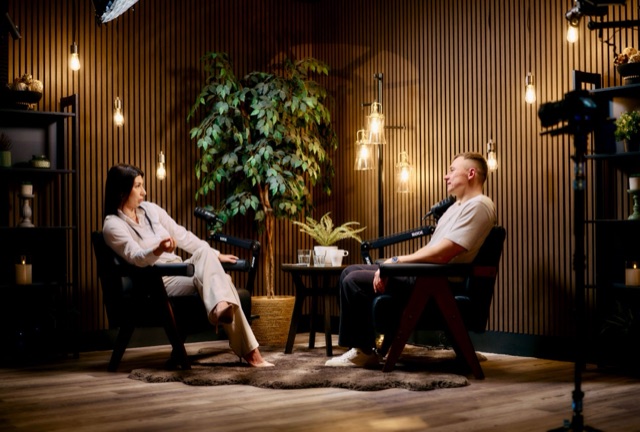
KristinaHi, everyone! Today we have a really interesting interview with an interesting specialist. I think you’ll learn something, get motivated, get inspired. So let’s go. Today our guest is a specialist I trust with my own health, with my body after hard training. A person, I’d say, with a big audience: a huge number of people with musculoskeletal problems turn to him. Professional athletes, sportspeople, or just regular people, it doesn’t matter. Vanya, hi!
IvanHi, Kristina. Thank you for the warm words. Hi, everyone. My field is actually pretty broad. I started with personal training. Then I added massage elements, finished courses in massage and rehabilitation. I’ve also been in folk medicine for a long time: that’s bonesetting, working with the internal organs, and on top of that I add massage. So you get a wide range, a kind of “hodgepodge.” I can use a lot of techniques, but in short, it’s simply about restoring health to the body.
KristinaI know you recently received an award here in the United States. Tell us more about it.
IvanThe “Rose of Paracelsus” is given to doctors who have worked for at least 25 years. I’m 33, and I’ve been working since I was eight, so that’s how it adds up. It just so happened that I put together all the methods of certain authors that I know, combined them, and made, you could say, my own. It works on restoring the spine and the musculoskeletal system. I gathered all the evidence and presented it in a presentation: I explained how I worked with those clients. I also developed a ball exercise routine for spinal mobility.
KristinaThat’s great. Congratulations, I’m really happy for you.
IvanThank you.
KristinaHow many clients a day go through your hands?
IvanThere’s a hard ceiling here. In the beginning, when I finished the massage courses and started practicing, it was funny: I went to people’s homes with a massage table. They kept telling us, “You’re full-fledged specialists now, you know your worth, go work.” But when it comes to practice, it’s just a stupor. You seem to know everything, you start working, and you work like a mechanical robot: you memorize the movements and get lost. You end up with a robotic system, and it wears you out. You think, what must the client think of me? The client, in theory, doesn’t care, but he will feel your hands.
I started out seeing ten clients a day, an hour and a half to two hours each. From morning till evening. I’d come home and lose my memory for a while: I didn’t remember how I got there. And on weekends I’d wake up with swollen hands.
KristinaYou burn out in the process of such intense work.
IvanAt that time I didn’t feel any pleasure at all.
KristinaAnd now?
IvanNow I have a huge eight years of experience. I try not to take more than five clients. Five is already a lot, three is ideal. When you work with pleasure, you feel the person, and massage is like a dance. A certain music plays in your head, and you just move. You may have noticed how I work. It’s the ergonomics of movement, and that’s why I don’t get tired.
KristinaWhat would you advise people? A lot of them come to you simply as a bonesetter, a massage therapist. What do you tell them?
IvanIt doesn’t have to be only visits to a massage therapist or a bonesetter, but also playing some kind of sport. You need to work on all fronts here. We understand this: weights, stretching, you can add fitness programs, pilates, for example. If we’re talking about competition prep, then you need a specialist to guide you. The loads are enormous, and it’s hard to talk about health: first of all, it’s about achieving a result in competitive form. If we’re talking about fitness, that’s health. And when you’re in sport, you’re stricter with yourself. Then you notice how your joints ache, how your ligaments are loaded, what you need to do so you don’t stray off the path and so you recover.
KristinaNow you do sports yourself, and we have an interesting connection: I’m a specialist in fitness, you’re in rehabilitation. How does fitness, bodybuilding affect you? You got fired up about competing on the professional stage. What role does bodybuilding play for you, how does it change you?
IvanI like the discipline. When you work out just for yourself, it’s only up to a certain point, and then the demands get bigger. I competed in 2015, prepared in 2016, and I liked it. But due to certain circumstances I stopped my athletic career. It was exactly in that period that I put the emphasis on rehabilitation. Having gone through sport, I understood that you absolutely have to restore your body.
KristinaYou mentioned discipline. It plays a decisive role in growth, no matter whether in sport or in your field. Discipline helps you not lose your mind. You understand what I mean?
IvanWhen you’re constantly within a system of discipline, your whole day is scheduled by routine, and your head has the same order. But if you plunge into work, forgetting about everything, then after a while your body will say, “That’s it, enough, I’m lying down. If you don’t want to lie down, I’ll make you.” Discipline helps you stay afloat. Everything is sorted out in your head, and the body works like clockwork.
KristinaDo you take absolutely all clients, or do you have some kind of selection?
IvanI have an internal selection. I used to take everyone.
KristinaCan you turn a client away?
IvanYes.
KristinaWhy?
IvanIt’s hard to say, but sometimes a person is unpleasant. I don’t know why. It’s internal, like with women: “no, this won’t work.”
KristinaIs it an energy factor? Or do you feel incompetent and say, “Guys, I can’t help you here,” or “We’re not a match energetically”?
IvanThe first thing I look at is the messages, when a person starts writing. You immediately see what kind of character they have, what they want and for what purpose. And I give them answers they may not like. Or later, when I’m seeing them, I talk with them during the session. When a person comes in, I put them on the table right away and always keep up a conversation. By the time I’ve greeted the person, I already understand who they are.
KristinaSo you not only help people with the musculoskeletal system, but also work as a psychologist on some level.
IvanWhen you work with people, even in training, you’re a psychologist. When people ask me what my education is, I always joke: “I’m an astrologer, a tarot reader, a psychologist, and a trainer.” The stars didn’t align for me to work out.
KristinaBut in reality the communication with a person is very close. Besides your specialty, you have to listen to the problems that come up for a person. Do you take them on yourself, or can you detach?
IvanNot always. I worry a lot about my clients. When a lot of people come in during the day, by the end of the day I become out of it. At first everything is fine: I talk with everyone nicely, in a good mood. But when I’m alone in the evening, there are these out-of-it moments.
KristinaDoes sport help you cope with that?
IvanThat’s why I train: I let off the energy. And you, when you have a big flow of clients, do you feel tired?
KristinaOf course, it’s a kind of emotional exhaustion. You share your energy with all your clients. After such a long time in the profession, I’ve learned to manage it more or less. But it doesn’t always work: we’re all living people, and that’s probably normal. As your professionalism grows, you cut off some things you don’t need.
KristinaIn massage work — imagine, you work in training, but massage is full contact, you work through the whole body. And sometimes a person starts letting emotions out, crying. Sometimes men sob.
IvanThat’s happened to me.
KristinaIs that normal?
IvanNormal. Mostly it has to do with trust in the family. A man is usually closed off. As a kid he’s told, “You’re a man, you’re not supposed to cry.” These limits. And in a family there can be mistrust, when a man can’t open up to someone close and keeps everything inside. It’s embarrassing to show tears in front of his woman. I understand if a person cries all the time. But when there are moments of overload, men carry all of this in themselves and come to a session. They don’t know me, I talk with them. It happens when I get to the neck. When I adjust the neck, everything is released. I see that the person is holding it in, and he tells me, “I’m not crying.” I say, “Come on, it’s fine.” And he starts sobbing.
I had one client, a long time ago, during an adjustment. When I finished all the manipulations, he just sobbed. I wore myself out handing him tissues: there’s a whole roll, and they’re all scattered around. He cried like a little boy, with snot bubbles and everything. Amazing moments.
KristinaWhere do you draw your energy from?
IvanHow should I put it, where from? I don’t know. I recover. I need time to recover.
KristinaWhat inspires you?
IvanHelping people. When a person smiles, hugs you, and says, “Thank you, you helped me a lot.” That sincere smile and happiness inspire me. Gratitude, probably.
KristinaThen can we say with confidence that this is your calling? Helping people?
IvanBut you have to know when to stop. When there’s too much of it, I start getting sad too. And there should be more happiness in life.
KristinaPeople come to you to solve problems with the musculoskeletal system. Besides the treatment you give them, do you tell them to exercise? How important is that? Can some problems be solved with massage alone?
IvanNo. You can’t solve them with massage alone. Massage is a supporting tool.
KristinaIs there such a thing as anti-cellulite massage?
IvanThere is. Right now the massage therapists are going to…
KristinaBy the way, I’d like to ask about this in detail, too. So does it actually exist, anti-cellulite massage?
IvanAnti-cellulite, lymphatic drainage. Really, any massage includes both kinds of techniques, just with a different emphasis.
KristinaLet’s dig deeper. What exactly makes it work?
IvanReally, it’s diet, nutrition.
KristinaSo is anti-cellulite massage a kind of scam after all? Marketing?
IvanNo, it’s not a scam. It’s a complement. If you stick to your diet and your training routine and go to supporting treatments like anti-cellulite massage, all of it together will work great. Women have problem areas that need to be worked on specifically by hand. Then the effect comes faster. Take sports massage: when women are preparing for competitions, why do they go for a massage? Through the fascia and the muscle attachments, the therapist squeezes everything out so there’s more definition and the muscles look more pronounced. They drive out the subcutaneous water, those accumulations. They drive out lactic acid so the muscles recover. If you train without massage, your body takes longer to recover.
KristinaLet’s explain to women what anti-cellulite massage is.
IvanIt’s the moment when the tissues and vessels fill well with blood: the blood starts working, there’s no stagnation.
KristinaCellulite is an inflamed fat cell. Where does it come from?
IvanFrom an unhealthy lifestyle. And, of course, from hormonal changes, that’s the second cause. An unhealthy lifestyle is an inactive one: you eat whatever, go to bed late, don’t work out. Then the system starts to break down. The lymphatic system is the immune system. If the immune system works poorly, if lymph flow is poor, waste builds up in the fat cell, it becomes inflamed and clogged. That’s how those lumps appear. You have to work on this, and it comes from the inside, not the outside.
KristinaIf you keep up the same lifestyle but go for anti-cellulite massage, what happens?
IvanProbably nothing. It’s like the joke: two friends meet, and one says, “You’ve lost so much weight, what’s the secret?” The other answers, “Healthy eating, workouts, and anti-cellulite cream.” And the first one asks, “What kind of cream?”
KristinaSo the person completely failed to hear. And the factors that matter besides the cream are most likely even more important than the cream. But people, I don’t know if you’ll agree with me or not, are used to looking for a magic pill that will quickly solve all their problems. Because the hardest work is the work on yourself. The moment laziness kicks in: “I’ll probably start on Monday… probably not this one, maybe the next.” And that self-pity ends up as a body that doesn’t look the way the person wants it to.
KristinaAfter all, a lot depends on a beautiful, athletic body. What do you think? When you meet someone, and they look good or not so good, what’s your gut feeling about them?
IvanGood question, actually. You can immediately see that a person is disciplined, that’s the first thing. When a man meets a man, there’s a psychological moment: either you see a competitor, or you show him respect. It depends on your state of mind and, in general, on how well you’re disposed toward people. And if it’s a woman, then of course: respect and attraction.
They say that what matters is what’s in a person’s soul, and everything else is nonsense. But a man, if we’re talking about men as such, is a visual creature. First of all, he evaluates appearance. Only later, if he looks further, will he appreciate other qualities. But if there’s no visual appeal, no looks, then nothing will happen.
KristinaI’m probably going to be somewhat blunt now. In our training we work with both women and men, and we often ask ourselves this question. Many people say: the body isn’t the main thing right now, lifestyle isn’t the main thing, what matters is a person’s soul. Yes, maybe the soul is a good thing. But when you see someone for the first time, you’re hardly going to want to figure out what kind of soul he has if he’s sitting there unkempt, fat, sweaty, smelly. Even if he’s a nutritionist. And you’re like, “Excuse me, may I get to know your soul?” while he has a bun with cream dripping out of it in his mouth.
IvanNo, of course not. What soul could we even be talking about? A priori you won’t want to find out anything, you’ll just want to recommend a good nutritionist and trainer. “What matters is the soul, not looks” is an excuse for your own laziness and inaction and, probably, a way to prop up your own ego. Because working on your appearance takes a very long time. When you work on your body, you change mentally, too: you become more confident, you start talking to people differently. I felt that myself. Those who watch me and have known me for a long time have seen it: even if you take my biography over the last eight years, I’m different every year. As if I’d lived in one personality, then in another. People didn’t recognize me. Someone who saw me a year ago and sees me now won’t recognize me.
KristinaDoes everyone need a trainer? For you, how important is it to have a good mentor? Why is that important, and what progress does it bring?
IvanThe brain is a lazy beast that will protect itself and make excuses. Up to a certain point, and I’m speaking for myself, I can get there on my own, but then I can’t go any further. You need a specialist who looks at you objectively from the outside, sees your form, and steers you in the right direction. There are subtleties you may not know about, and the person training you has gained experience from several other trainers. He has a life path that he’s put together and is now passing on to you. It makes for a powerful collaboration.
Let me give you an example with me. Some muscle groups were lagging, but it was enough to change the angle in the exercises a little. You told me that. I couldn’t see it myself, but you saw from the outside that I was doing it wrong. My shoulders dominate, my chest wasn’t working. After I changed the angle, I started to feel my chest really well. The progress isn’t exactly explosive, but it’s happening. I got past that dead point. So that’s the question: do you need a trainer even if your level in training is already quite high?
KristinaVanya, are you an expensive specialist?
IvanYes, fairly.
KristinaHow do you react when people come in and say, “Why is it so expensive?”
IvanMost likely they’re just embarrassed to ask directly. Usually it sounds like, “I wasn’t expecting that amount.” I never push my services. I say: if we’re going to do this and this, then honestly, my dear, you need to work out, to include training in your life. If you want me to help, let’s start working with gymnastics, with massage. I spell everything out: you need to do this, and this. If you do all of it, everything will be fine. And then the person decides for himself: does he need to invest in his health, or go to another specialist.
I get asked this question a lot, and I usually answer briefly: “Did you come to me for the result or for the price?” The person freezes for a moment and realizes that, most likely, he came for the result. People don’t fuss when they buy something unimportant. But here they want to save money and get more value. But this path is either very long, or it can be shortened. Clients often come to me to get in shape, but they get scared by the price and find a cheaper specialist. I tell them, “Well, go ahead.” Most likely, after a while they’ll come back to me. But they’ve already gone down a path that took them further from the result, when the result could have come sooner. People often don’t realize this. If they had gone to a more expensive but truly competent specialist, they would have gotten help faster, without spending so much time, money, and energy. God willing, their health will still be good after a trainer like that. Then the person comes to me, because quite a lot of time has passed and the request hasn’t been fulfilled.
KristinaIn your field, I think it’s even scarier.
IvanWhy?
KristinaBecause a person develops a problem, and they usually come to you when it’s already pressing and there’s no point in putting it off any longer. He thinks, “Oh, that’s so expensive. I’ll probably go to some Pete after all, he’s a hundred dollars cheaper.” But the health problem isn’t solved, it has moved to another, more serious level, and then the person comes to you.
IvanTwo global problems come up here. In the first situation, the person is thinking about saving money, and it doesn’t hurt that much yet. In the second, he comes in a panic and is ready to pay any amount. It’s probably better to turn that kind of person away. It’s a flare-up period, the person agrees to anything, and it’s hard to fix: you need time for the inflammation to subside, this flare-up syndrome, when the nervous system can no longer cope. You can take the money, but you won’t live up to expectations. The nervous system has said, “I don’t need this, I need to recover.” The person isn’t satisfied with the result, and you get a bad review. I’ve run into this: I say it takes time, and he answers, “In short, bad specialist.” Now I’ve learned from experience and I don’t take such people.
By the way, I’m not against pharmacology. Many specialists, all sorts of folk medicine and wellness people, even write in books that you shouldn’t, that you need to be closer to nature. While you’re being closer to nature, you’ll croak. You have to understand: if it’s a flare-up period, relieve the inflammation with pills, and only then think about how to recover. And while you’re saving money, it may already be too late.
KristinaWhen you take on a client with serious musculoskeletal problems, do you look at their MRI?
IvanFirst thing. That’s another misconception among a lot of specialists. If you look at it, I’m kind of a “wrong” specialist: I’m skeptical about a lot of what I hear. Take the spine, the spinous processes, those little bones that stick out along the back. Plenty of people can feel that “washboard” with their fingers. Depending on how the hemispheres of the brain develop, the body works its muscles differently: one side is stronger, the other weaker. Because of that, the muscles pull the bones toward their side through their attachments, and the spinous processes can’t be perfectly straight, like on a mannequin. They’re crooked. And when a specialist runs their fingers over those processes and says, “Here, you have one that’s shifted,” yes, there are cases where you really do feel that a vertebra is displaced unnaturally, off in some other direction. But there are also small margins of error. You can’t say, “You have a hernia right here, a vertebra is shifted right there.” How do you know?
Then the client comes in and says, “Last time they told me I have a hernia right here. You felt around and didn’t find it? So what kind of specialists are you?” And the question arises: why can’t you see where my hernia is? Did you not switch on your X-ray vision at that moment? Something broke. That’s why, if you’re working with some area of the body, the spine for example, go get an MRI first and check.
It’s really hard with this. Originally everything is done in steps: they give you pharmaceuticals, pills, and if that doesn’t help, they send you for an X-ray. Why an X-ray, I don’t understand: an X-ray shows the integrity of the bone, and then, if the bones are intact, they send you for an MRI. When they could have just done the MRI right away.
KristinaTell me, do you have a lot of female clients?
IvanMostly women.
KristinaAre they not shy about coming to you for sessions? Do any kinds of feelings come up before the visit? After all, you’re a man.
IvanActually, no, I’m probably the one who’s shyer. Naturally, by nature: a woman comes to a man, and men go to women specialists. I think that’s more correct. You can’t say a massage therapist is an asexual being. It’s better for a man to work with women.
KristinaWhy? Is it connected to some kind of energy?
IvanProbably it’s about rapport. I can’t even say why it is. I won’t be disingenuous and speak for other people; I’m judging by myself, by how I work. There’s another point: if you take an athlete you need to work with hard, it’s different. A man can work a man’s body well, and a woman is weaker in any case. But if you take, say, anti-cellulite massage, then of course it’s easier to work with women. First, they’re receptive to you, and I can talk with them about many topics. With men, you can’t get a word out of them. But when a woman works with them (I have a lot of good friends who are female massage specialists), men are open. It’s most likely a psycho-emotional state.
KristinaInteresting, of course. And in the training process? You train with me. Does it matter at all? By the way, at my last session a young woman who trains with a male trainer was very surprised that a strong young guy trains with a girl. What can you say about that?
IvanHere, I think, it all depends on the goals you’ve set and on what matters to me first of all. I look at the person’s professionalism, yours specifically: what path you’ve walked, what you do. I’m not stupid, I can see in practice what your approach is. And that smooths out the rough edges. I don’t look at gender, I look at experience and approach, at how you work with a person. A person can be experienced in their field, but if they treat their duties carelessly, see only themselves in first place, and don’t care about the client, then yes. With you it’s the opposite. I see how you work, what your approach is to the training process, to nutrition, to everything, to competing, and of course I chose you.
KristinaAs for your sessions, it’s a whole atmosphere you step into. You work not only physically, not only creating manipulations for the musculoskeletal system. I’m speaking from my own experience. When I come to you, you pour delicious herbal tea, talk with the client, find out what they’re asking for, and only then get to work. There are very few specialists who immerse themselves in their client this much. And reading the reviews under your posts, which you often put up, you can see that people absolutely love it. You really do provide quality service.
Having lived here in the United States for more than a few years, I can say with confidence that the quality of services here suffers a lot, no matter the field. And when Russian-speaking specialists of truly high caliber arrive here and provide this kind of quality service, they grow very fast, people get to know them quickly, and want to go to them. And that’s cool. I think you have far more positive reviews than negative ones. As a specialist myself, I can say for sure that I have never once regretted coming to you, even though I work in the musculoskeletal field myself, have for a long time, and have a lot of experience going to specialists. You’re truly at a very high level. And the money on your price list is worth it, and that’s cool.
IvanOh, keep saying nice things to me.
KristinaFor me, it’s a pleasure to interview people who are truly deep specialists in their field. I think interviews like this, made especially for you, are a huge plus: you can hear something extremely useful for yourself and draw conclusions. Vanya, thank you so much for the interview, it was very informative and very deep. Wish something to our listeners from yourself personally.
IvanThank you very much, that’s very nice. I wish you all to keep developing constantly, because movement is life. Take care of yourselves. When you pay attention to your body, that’s when everything will work out for you. But if you neglect yourself and spin in these rat races of life, you can lose yourself entirely as a person.
IvanTake care of your temple, your body, and move slowly but surely toward your goals.
KristinaThank you so much, that’s wonderful.



 Kristina Samofal
 Photo & Video Production